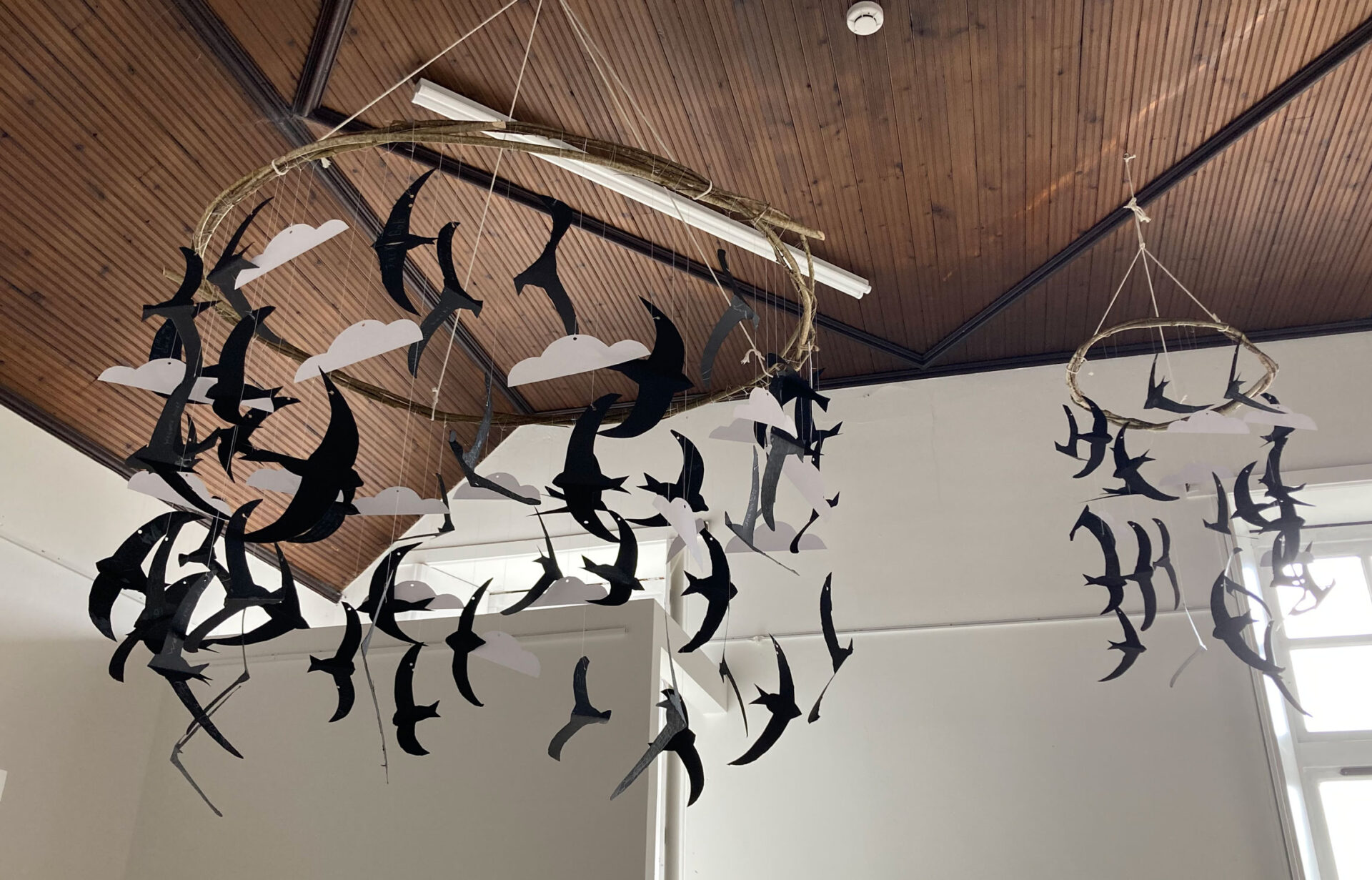
With the recent public launch of Wild Wings of Hope, we’ve put together three simple ways for people to take action for insects and birds.
It’s important to us that audiences leave our workshops with more than a sense of connection and creative inspiration — we want people to feel empowered, something often missing in today’s political and environmental climate.
That’s why we’ve put together three tangible takeaways you can act on. From planting windowsill pollinators to becoming a citizen scientist, these small steps add up to real change.
Let’s take a closer look at each one.

1. Become a citizen scientist
We want people to take action for nature — outdoors, on the ground, and together as a community. And one of the most accessible ways to do this is through citizen science projects.
Every record adds a vital piece of data, helping scientists and conservationists track migrating populations across Scotland and Africa, and identify nest sites that need protection. Knowing where swallows and swifts are nesting can help prevent nest destruction, especially when old or derelict buildings are involved.
But it’s not just about data — it’s about the joy of getting outside, watching the skies, noticing flight patterns, and reconnecting with the changing seasons.
- Spot swallows with iNaturalist: We have a dedicated Wild Wings of Hope project for mapping swallow sightings across Scotland. This is an evolving conservation mapping tool, helping communities identify the best places to spot local swallows and protect their nesting sites.
- Take part in Swift Mapper: Developed with Action for Swifts, Natural Apptitude, Swift Conservation and the Swifts Local Network, this RSPB web tool and app lets you record nesting swifts and help protect their homes.

2. Give Swifts & Swallows a home
- Put up a nest box: Install a nest box under the eaves of your house to mimic the cosy spaces swifts love. Swifts may take time to discover a new nest site, so don’t be discouraged if your box isn’t used right away. These long-lived birds are creatures of habit — once they find it, they’ll return year after year.
- Install a Swift brick: If you’re planning a house renovation or extension, then a Swift brick can easily be built into the fabric of a wall. It’s the perfect permanent and low-maintenance alternative to a nest box. Or why not go for both?
- Swallow nest cup: Barn Swallows also need safe places to raise their young. These terracotta cups are designed to match the exact size and shape of natural swallow nests. Installing one high inside an outbuilding or a large porch with permanent access to the outdoors gives swallows the perfect spot to return to each year — a simple and effective way to support them.

3. Create a Wild Space for insects
As native forests and wildflower meadows disappear, insects are in trouble and need our help.
Our partner charity, Butterfly Conservation, has created a growing movement called Wild Spaces — empowering people to create places where butterflies and moths can feed, breed, and shelter.
From window boxes and patio planters to gardens and parks, you can create a Wild Space almost anywhere, enriching your surroundings with insects and the birds that depend on them.
With the ongoing conservation work of dedicated charities such as Butterfly Conservation and RSPB Scotland, the planting of wild spaces (big and small), and citizen science recordings from everyday people like you and me, we can support these winged migrants that travel thousands of miles each year from Africa to the UK. Together, we can ensure their annual arrival in spring is more than just a spectacle — it is a living sign of the beauty and resilience of the natural world, one that knows no borders.
In today’s political climate, surely there is no stronger message of hope and unity than this.
Visit the link below to find out more and register your Wild Space.



Our first feedback session in an NHS setting
A test flight for the Wild Wings of Hope AR prototype, in collaboration with RSPB Scotland—exploring how craft, storytelling and technology can support nature connection in care.
4