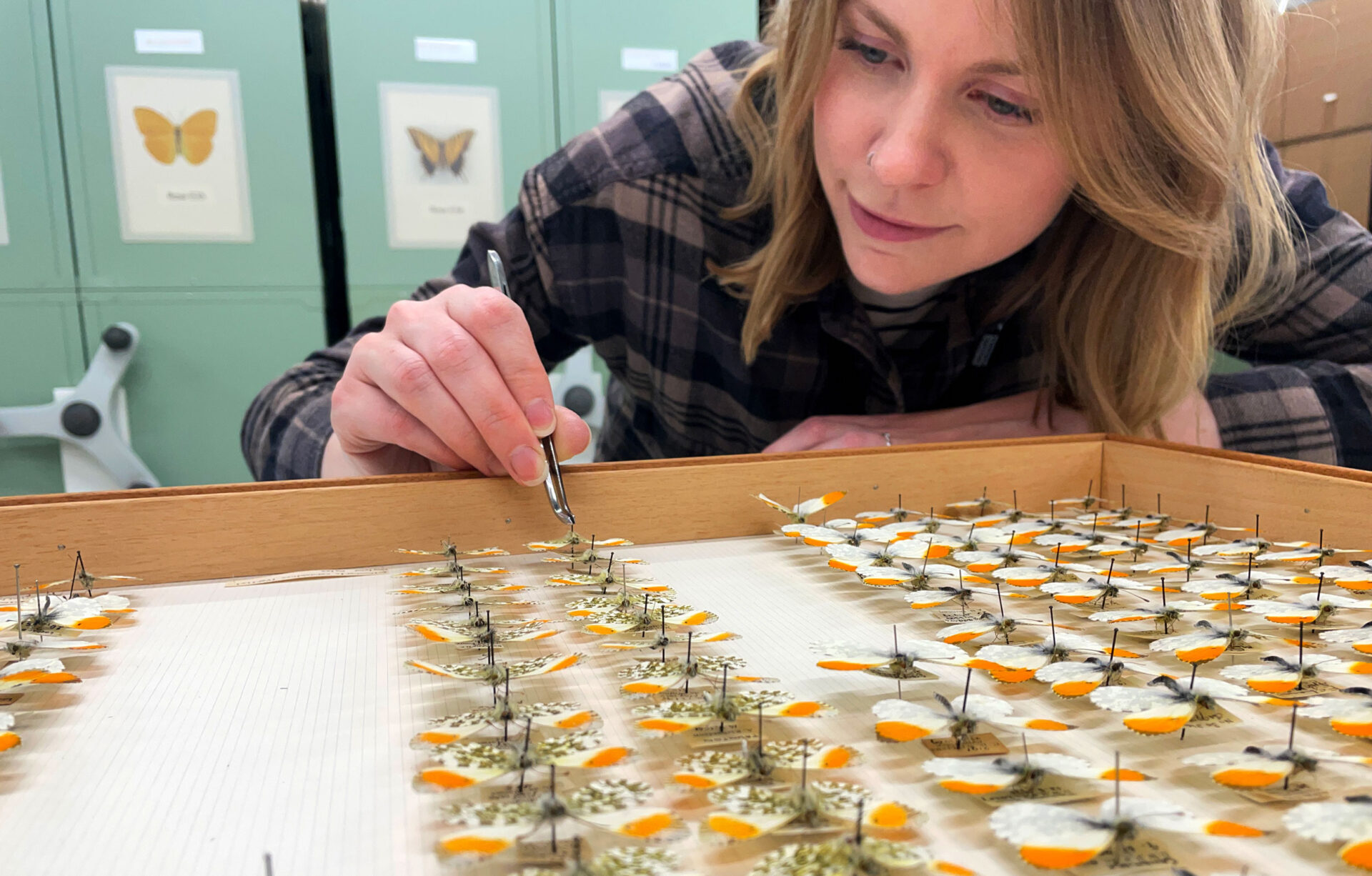
Beneath the lamplight, I lean over a retired entomology drawer smelling of aged wood and naphthalene — a chemical once used to protect specimens.
The smell lingers as I use a ruler to place a row of papercut orange-tip butterflies within a carefully-aligned grid of paper wings.
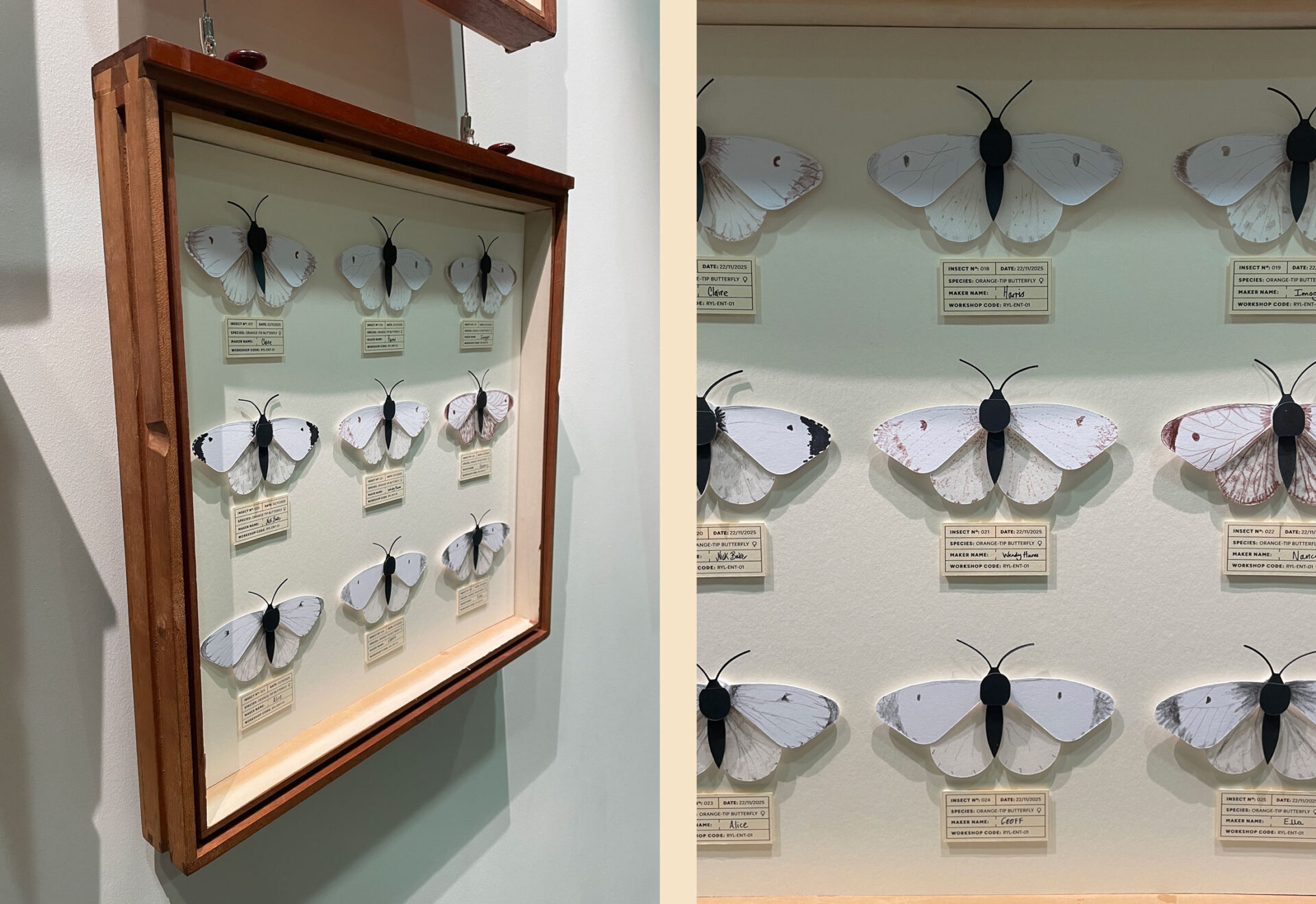
I’m preparing work for an upcoming Wild Wings of Hope exhibition, which will display a combination of personal and co-created papercut insects and birds at the National Museum of Scotland.
The orange-tip butterflies at hand emerged out of community workshops and outreach programmes at the museum, with contributions from people living with dementia, hospice patients, families, and a special event with professional entomologists delivered in partnership with the Royal Entomological Society.
To make the process accessible, participants worked from templates that provided the structure of the butterfly’s wings. Within those outlines, each person was free to use pencils and pens to add their own markings, turning a shared design into something expressive and deeply personal.
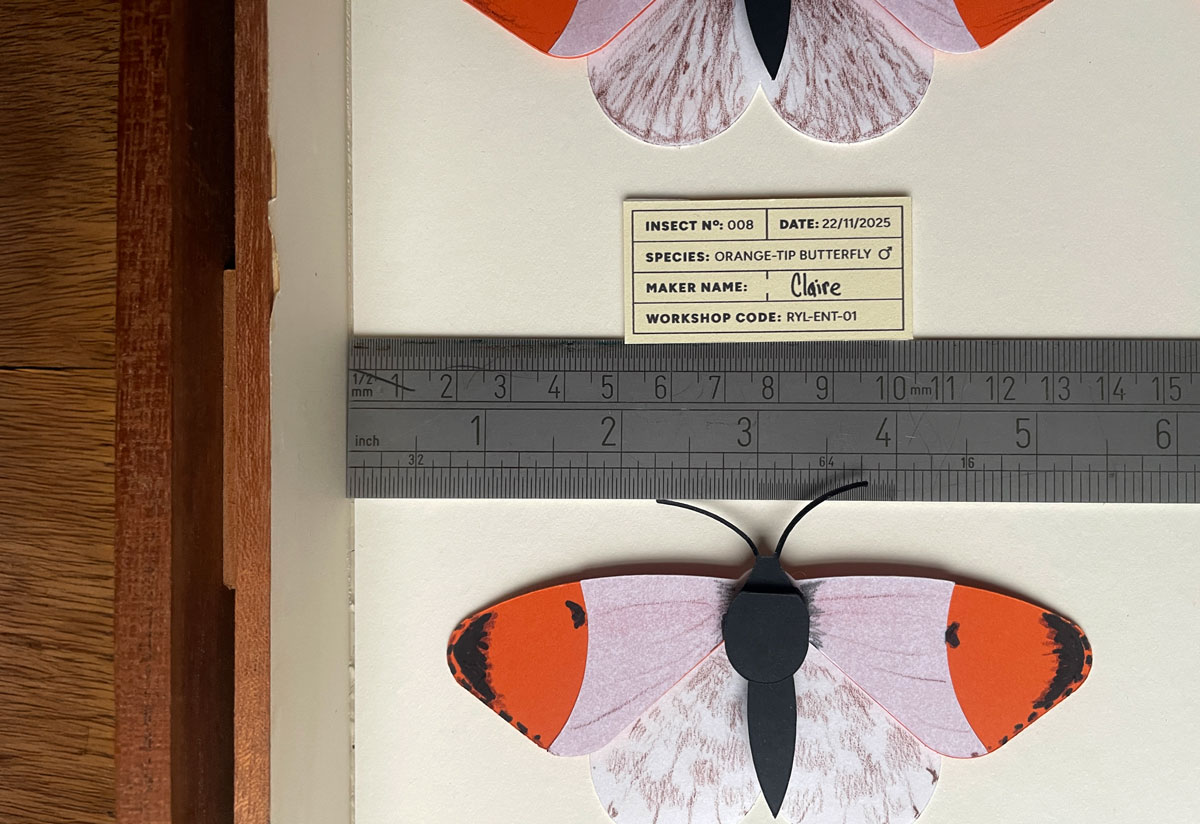
Each butterfly is accompanied by a small entomology-style label noting the name of its maker, a unique workshop code, and the date and location it was created — echoing the labelling traditions used in scientific collections.
The finished pieces are being displayed in upcycled entomology drawers, generously donated by the team at the National Museums Scotland entomology department— the very drawers I’m leaning over as I place each butterfly, row by row.
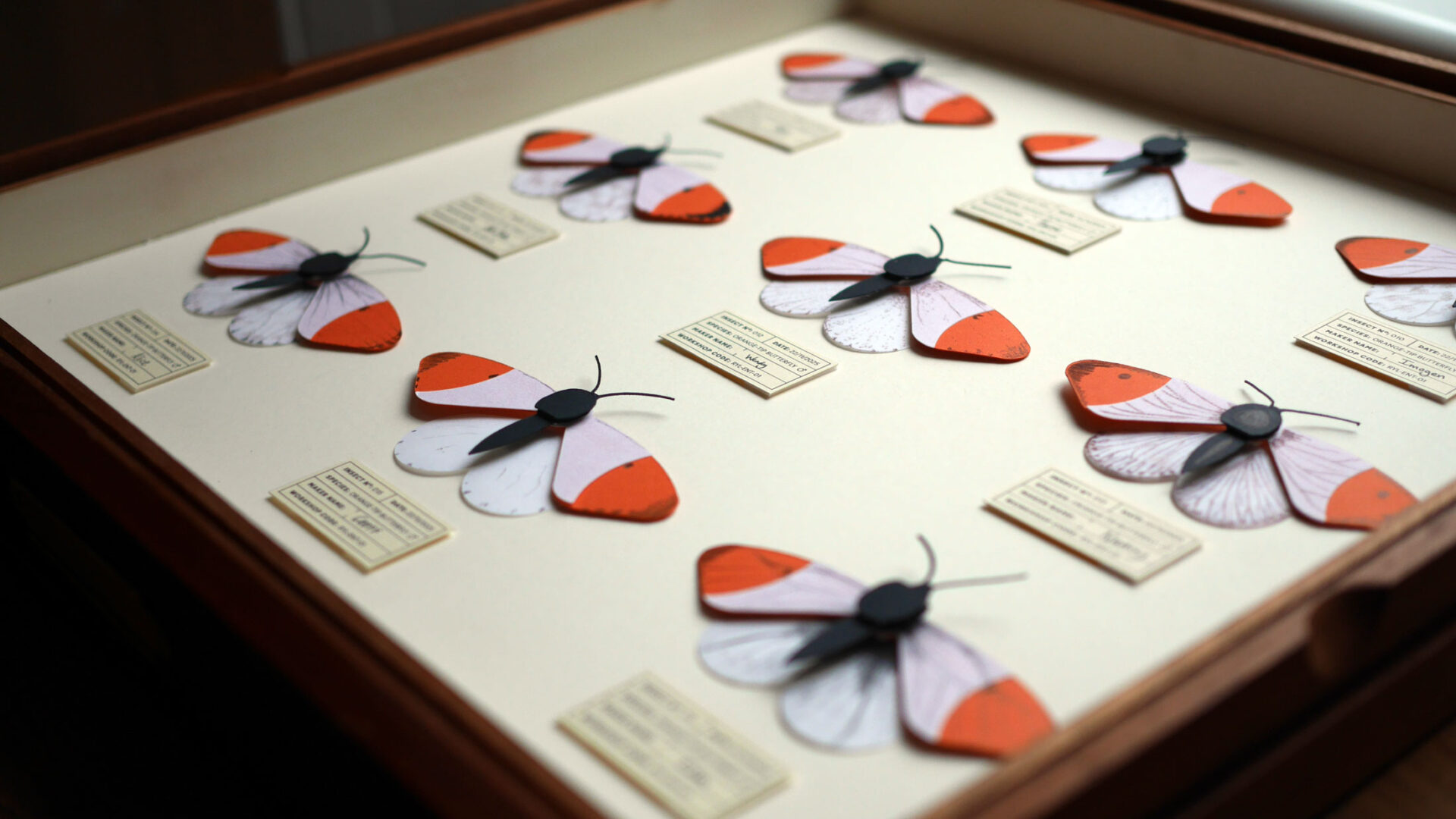
But who is the Orange-tip butterfly, and why has it become an emblem of this project?
Male Orange-tips (Anthocharis cardamines) have bright, fiery orange wing tips, while females have soft white wings with mottled green underwings. These differences help them in different ways: males use their bold colour to patrol territories and attract mates, while females rely on camouflage as they search for the perfect plants on which to lay their eggs.
Although Orange-tips are not a migratory species, their story still carries the theme of movement, change, and hope.
Here in Scotland, where Orange-tips were once scarce, their story is shifting. Warmer seasons have allowed the species to extend its range northward, and in recent years, Orange-tips have appeared in places they were rarely seen before. It’s a quietly hopeful shift — not the usual climate story of decline, but a reminder that some species adapt, move, and find new footholds.
I’ve written more about the story of the orange-tip butterfly, my research visit with Ash Whiffin, Curator of Entomology at the National Museums Scotland Collections Centre, and the remarkable collections that helped shape this project in a separate blog post.
Acknowledgements
This project has been shaped by many generous hands and minds. I’m deeply grateful to all of the participants who have joined the workshops so far, and to Ash Whiffin for sharing her expertise, time, and passion for insects so generously.
My thanks also go to the Learning and Engagement team at National Museums Scotland for their support in delivering the workshops and helping bring the exhibition to life.
I’m grateful to Fedrigoni for donating the beautiful papers that made these delicate pieces possible, and to Creative Scotland for their funding and belief in the project.
And finally, to all things that fly, flutter, and crawl, for inspiring this body of work.

More from the Studio
Wild Wings of Hope if a project by Ed Harrison. Discover more of his creative work over on his website.
Visit edharrison.co.uk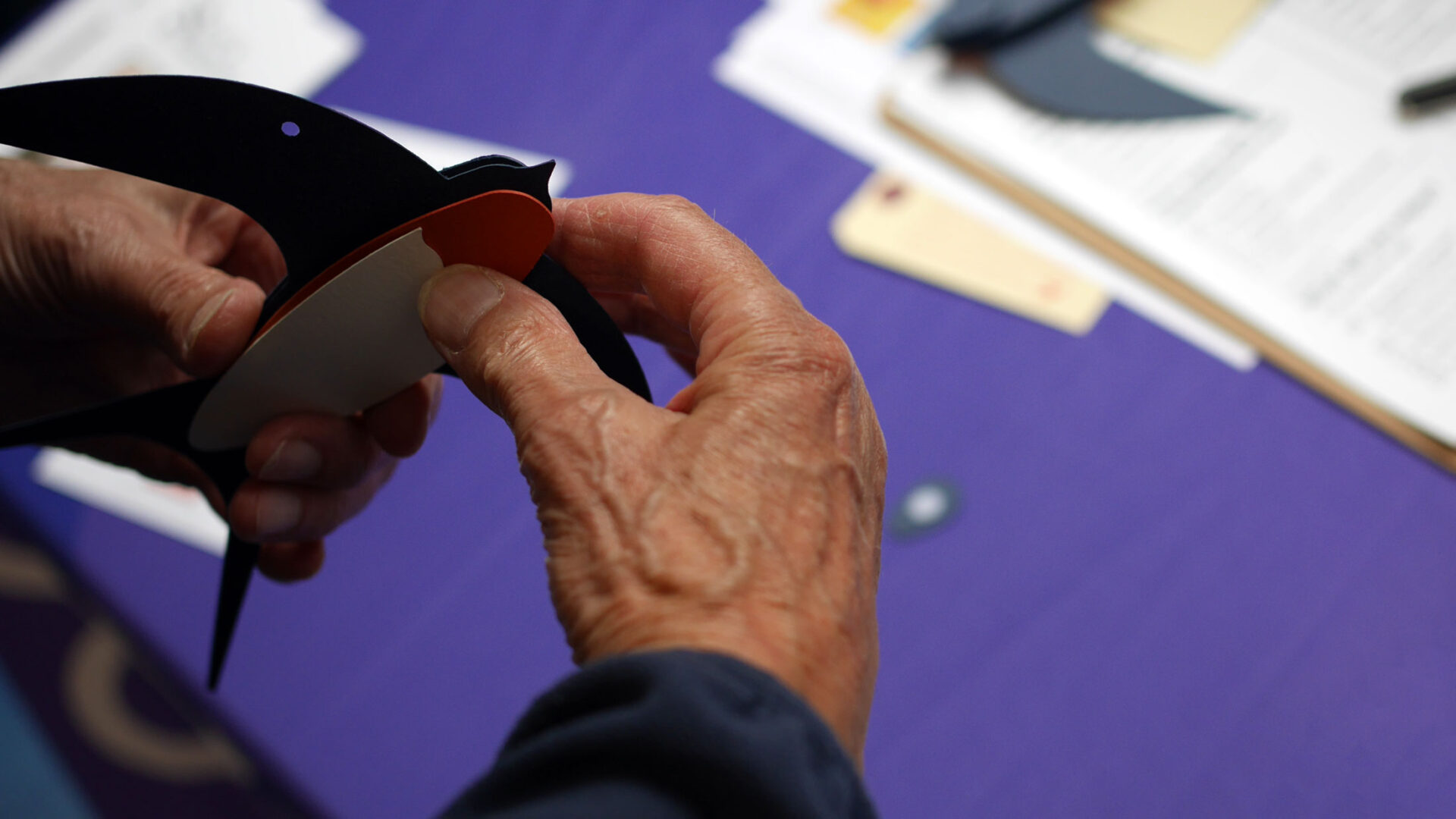
Our first feedback session in an NHS setting
A test flight for the Wild Wings of Hope AR prototype, in collaboration with RSPB Scotland—exploring how craft, storytelling and technology can support nature connection in care.
4