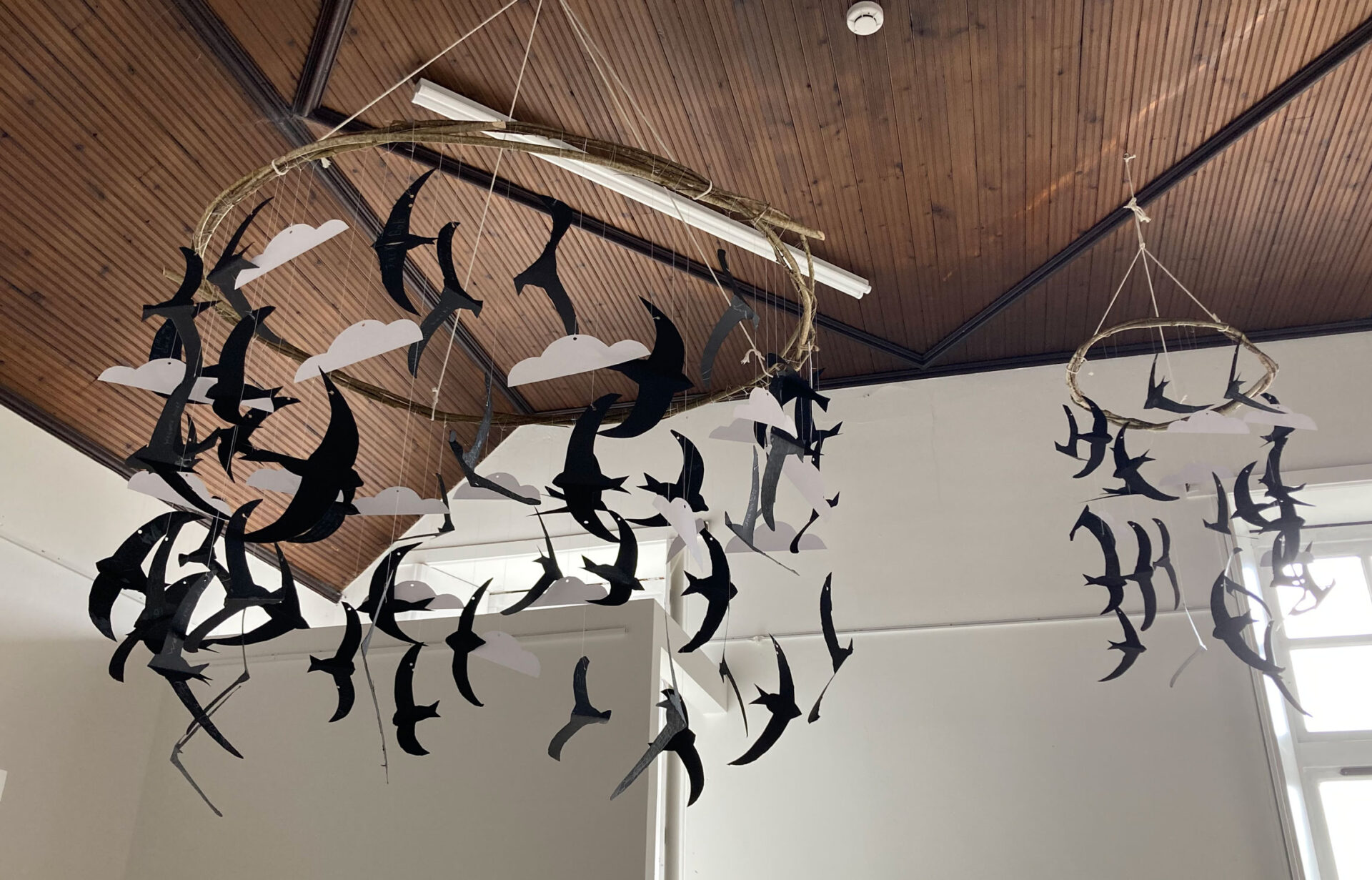
I recently facilitated a community craft workshop with Alzheimer Scotland, a charity supporting people living with dementia and their relatives.
Dementia is surely one of the most challenging forms of loss — not only for the person experiencing it, but for those who love them. It is a humbling thing to sit alongside families navigating this shifting landscape of memory.
And to be welcomed into this space is nothing but a privilege.
Before the workshop began, I shared a short artist’s presentation — offering a glimpse into my own story, the early journey of Wild Wings of Hope, and the migration of barn swallows that has come to sit at the heart of the work.
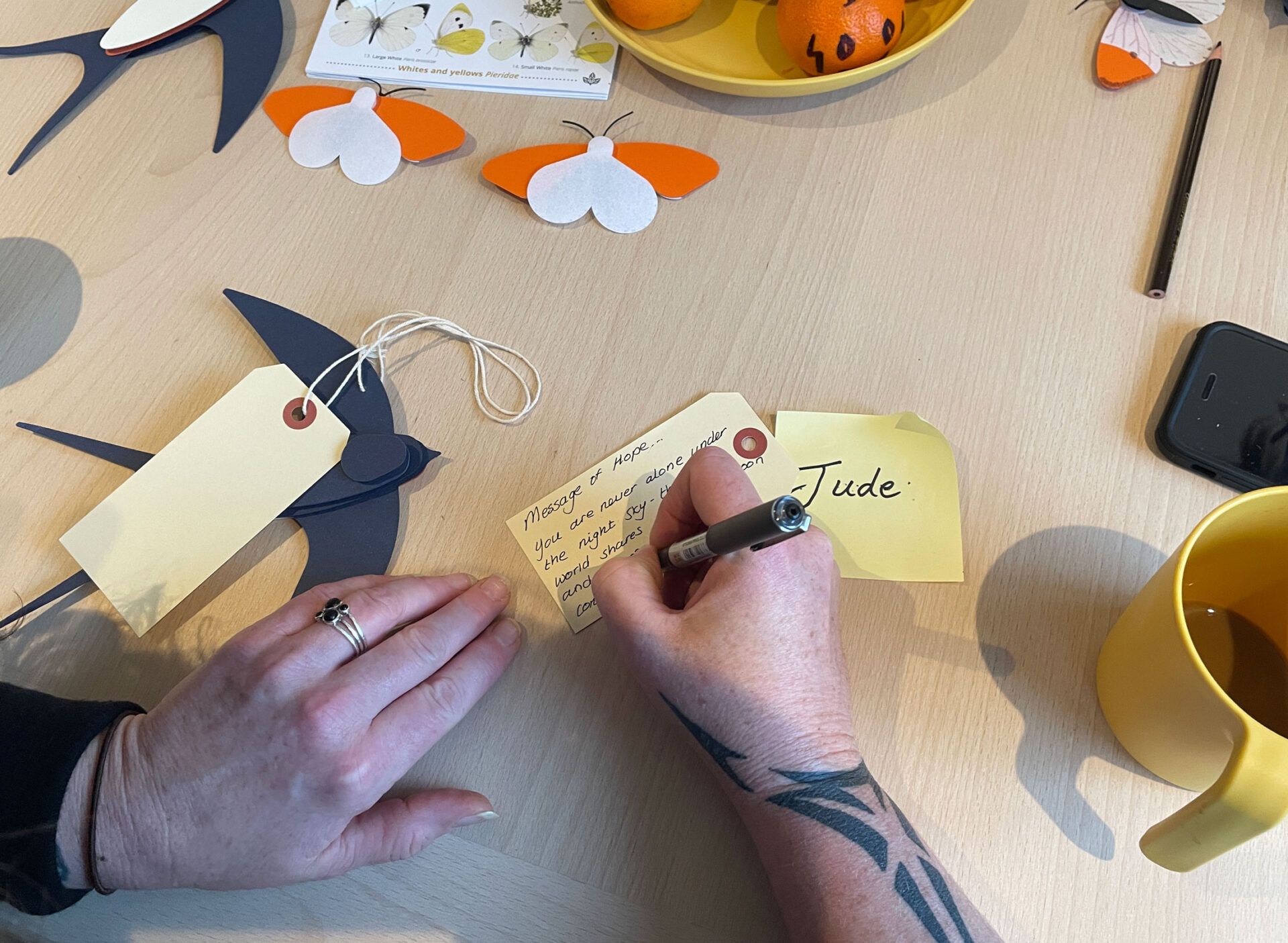
We then took a gentle pause, making cups of tea and allowing the room to settle, before moving into the act of making together.
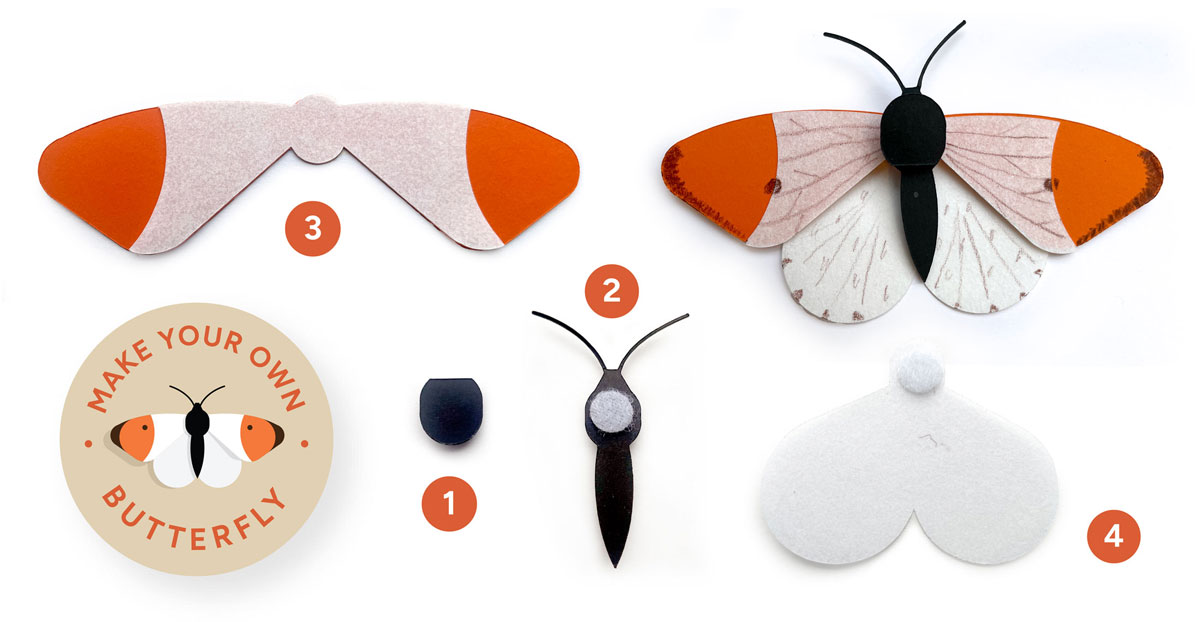
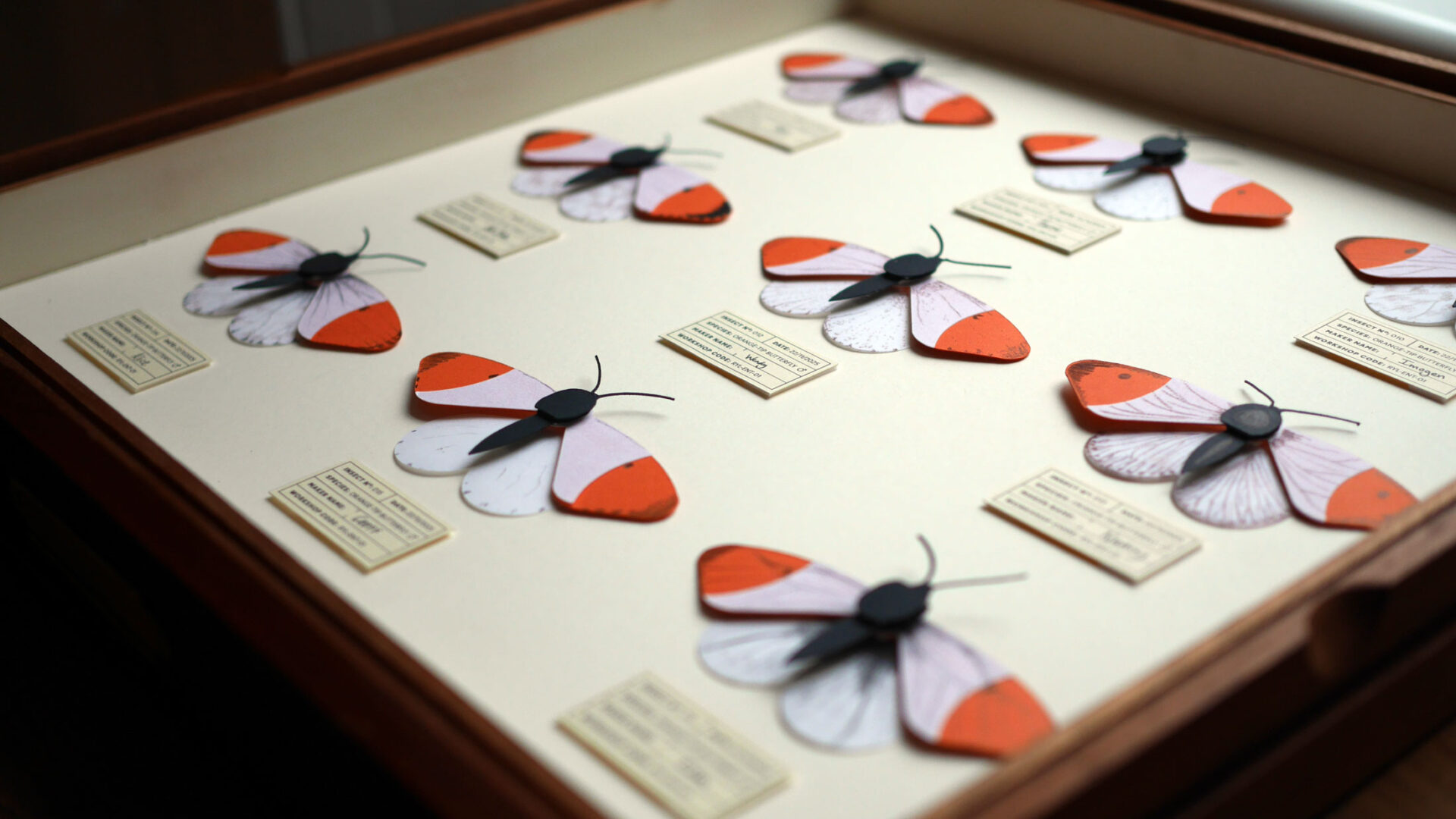
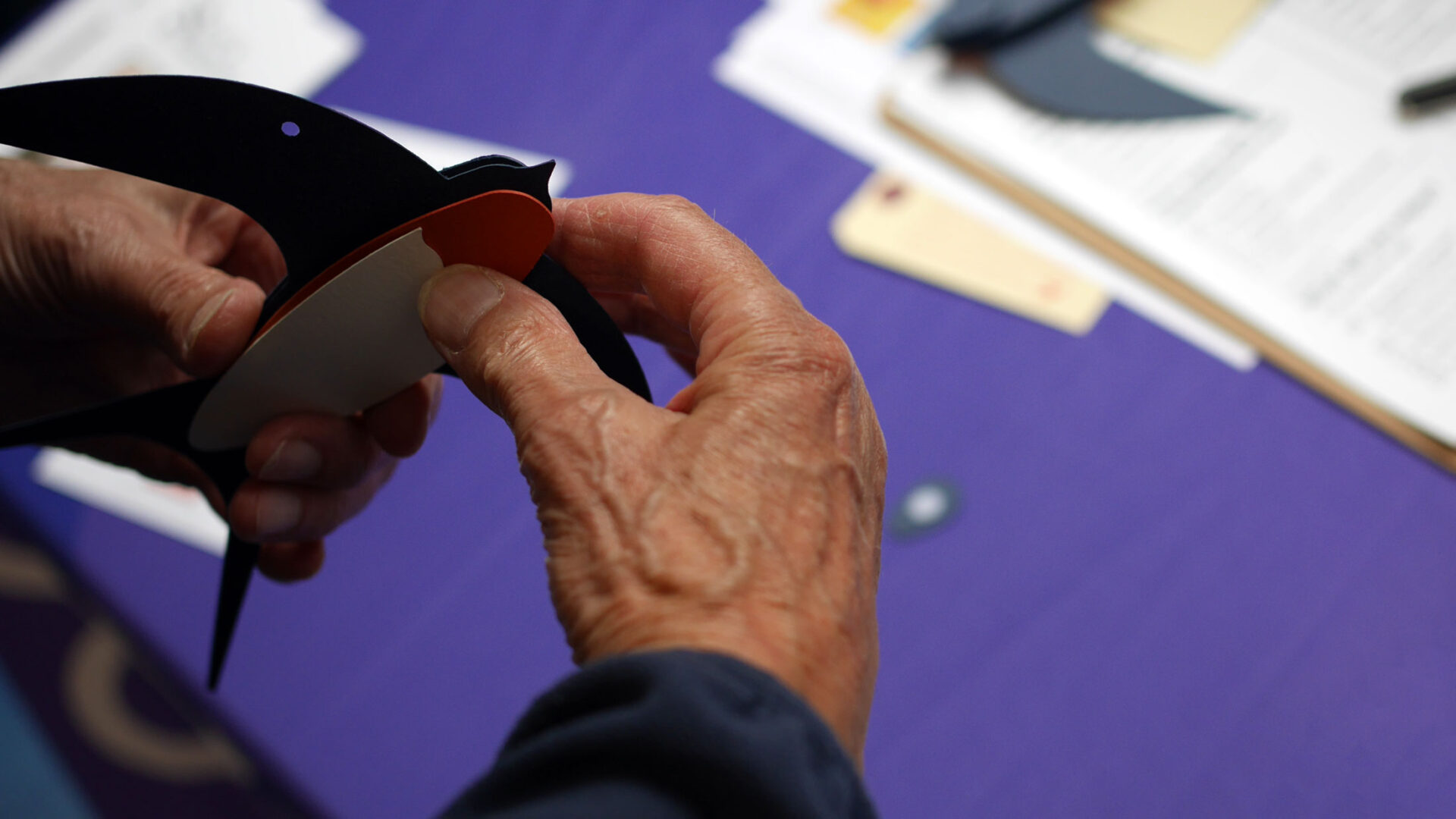
Over the course of the workshop, eight participants each made a barn swallow and an orange-tip butterfly—simple forms, patiently cut and assembled by hand. The making was slow and deliberate, allowing space for conversation, pauses, and quiet concentration.
The orange-tip is a species I’ve been researching with entomologist Ash Whiffin at the National Museum of Scotland collections. For me, growing up in South Wales, the orange-tip always felt like a signal of spring’s return—fleeting, bright, and gone before you know it. But here in Scotland, where this butterfly was once scarce, its story is changing.
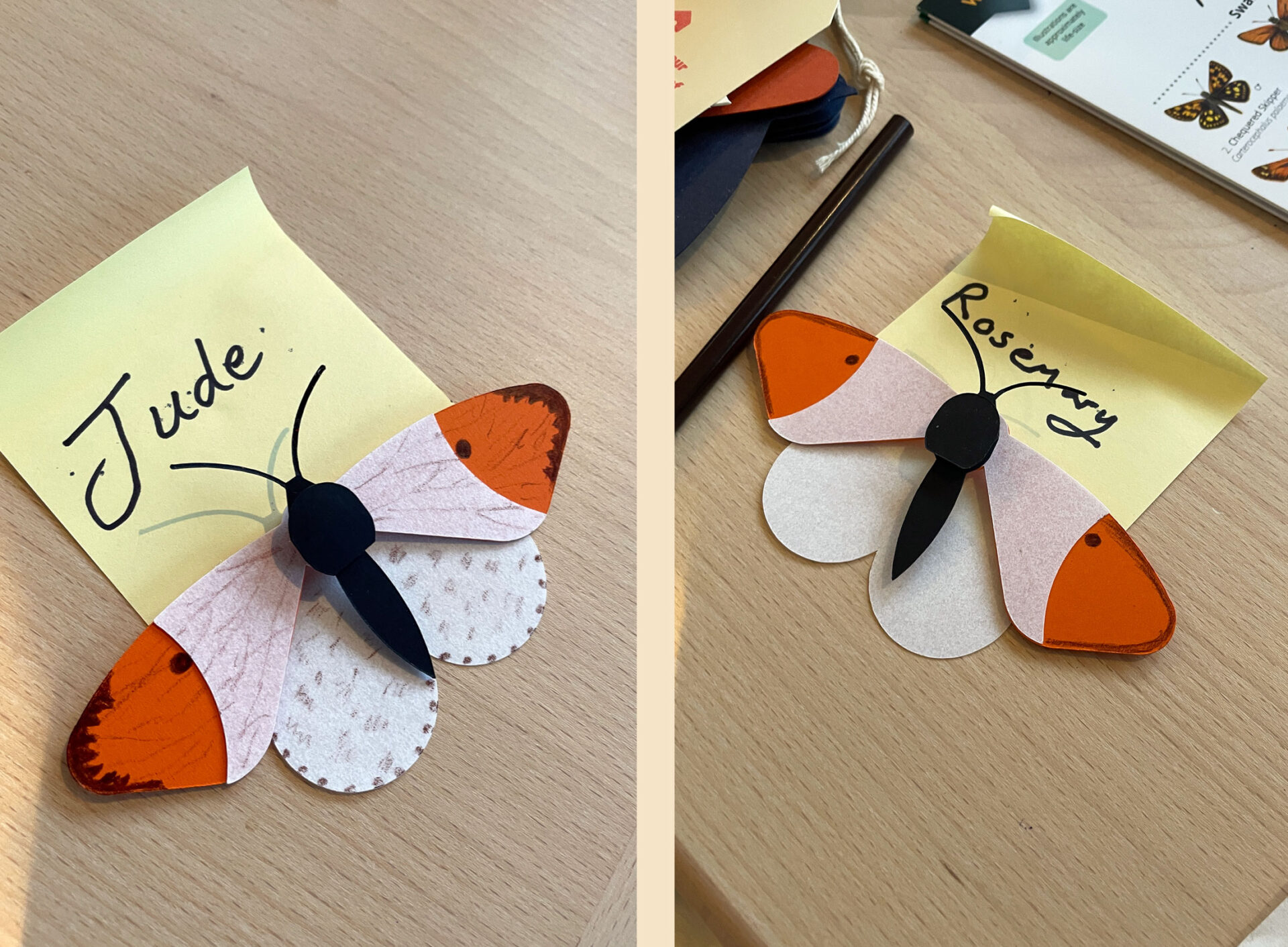
Warmer seasons have allowed the species to extend its range northward, and in recent years orange-tips have been appearing in places they were rarely seen before. It’s a quietly hopeful shift—not the more familiar climate narrative of loss, but a reminder that some species do adapt, move, and find new footholds.
A story of resilience, unfolding in hedgerows and roadside verges just beyond the city of Edinburgh, where I now live—and one that feels especially important to hold alongside the slower, shared act of making.


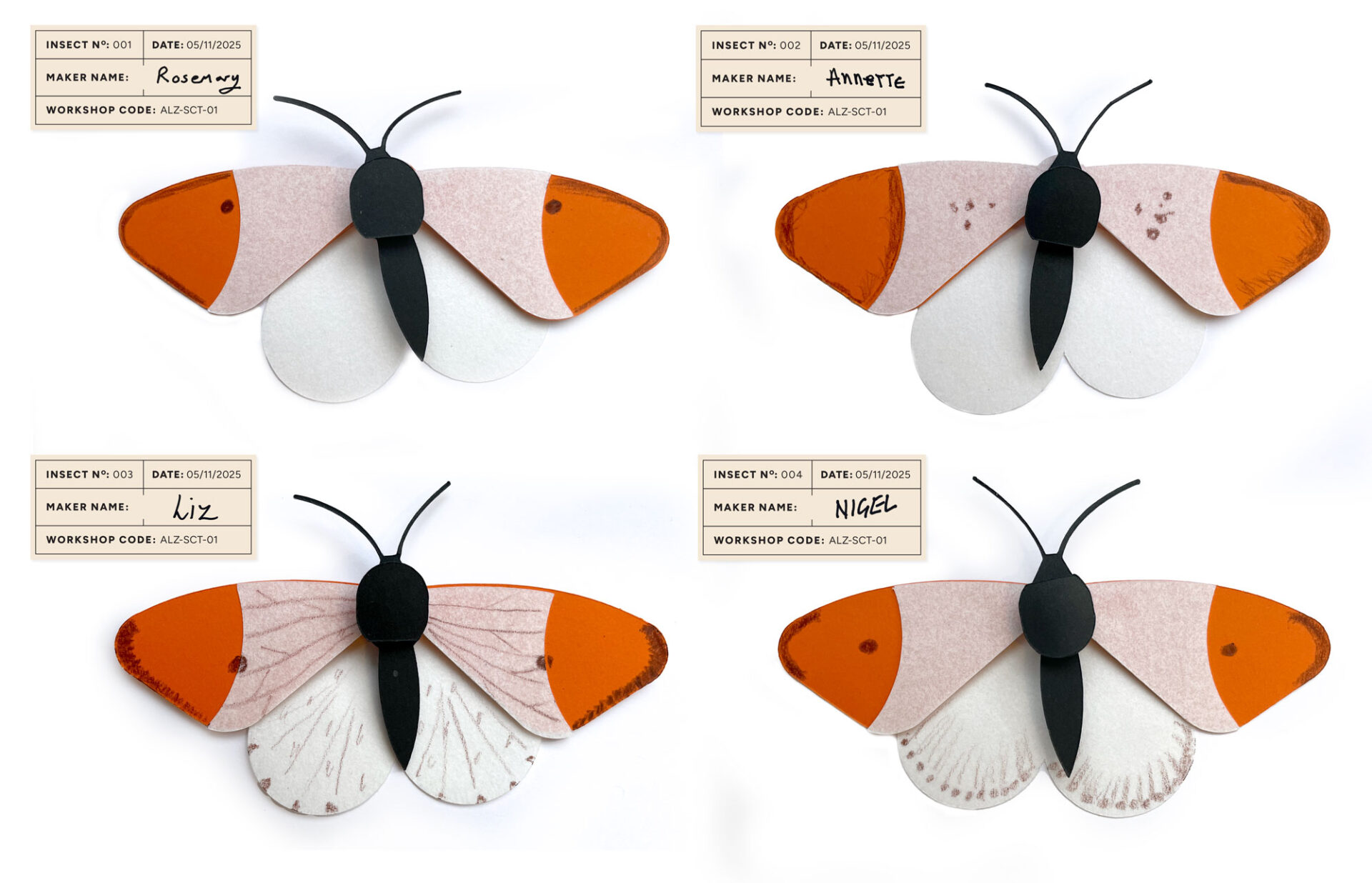
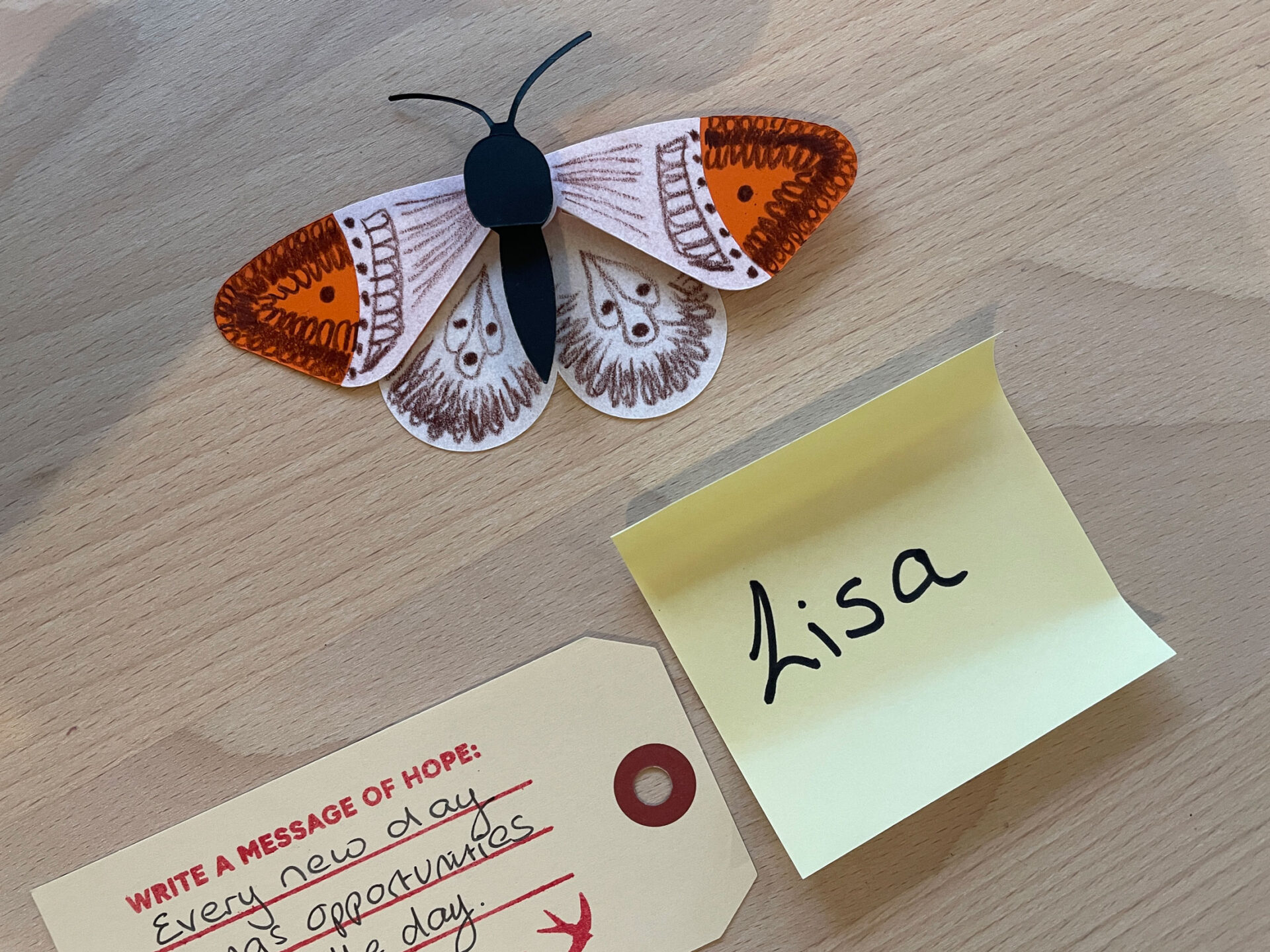
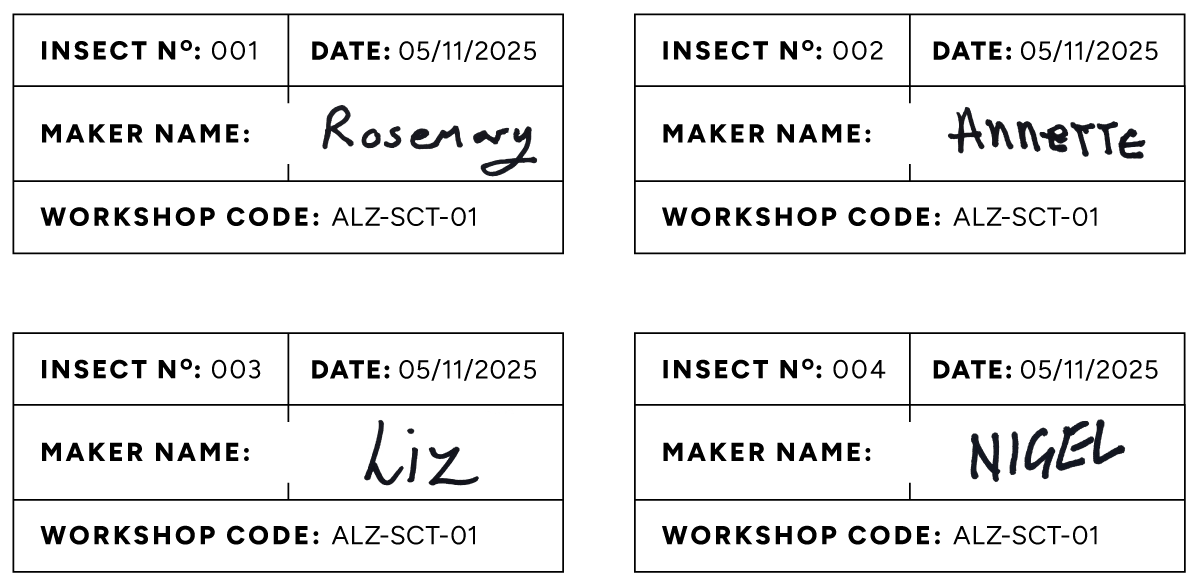
Following the workshop, I created small, bespoke entomology-style labels to sit alongside the butterflies, inspired by my research with the National Museum of Scotland Collections Centre with Ash Whiffin.
Each label was unique — handwritten with the participant’s name and designed to accompany the individual markings on their butterfly’s wings — drawing on the language and format of classical entomology labels.
This project is, at its heart, about hope.
And now, working with people whose memories are fading is building on that understanding — reshaping it and revealing it in a new light. I’m learning not to rush to name hope, or offer it as something to be prescribed.
Hope is not always accessible — and sometimes the most honest thing we can do is sit beside what is.
And yet.
Whilst sitting with the difficult moments, there are still flashes of joy. Shared laughter, a gentle conversation, a moment of recognition. These moments don’t erase the pain, but exist alongside it.
And there is something quietly profound in that.
With thanks to Creative Scotland for funding this phase of the work, and Fedrigoni for supplying the papers used in the workshops.
Our first feedback session in an NHS setting
A test flight for the Wild Wings of Hope AR prototype, in collaboration with RSPB Scotland—exploring how craft, storytelling and technology can support nature connection in care.
4