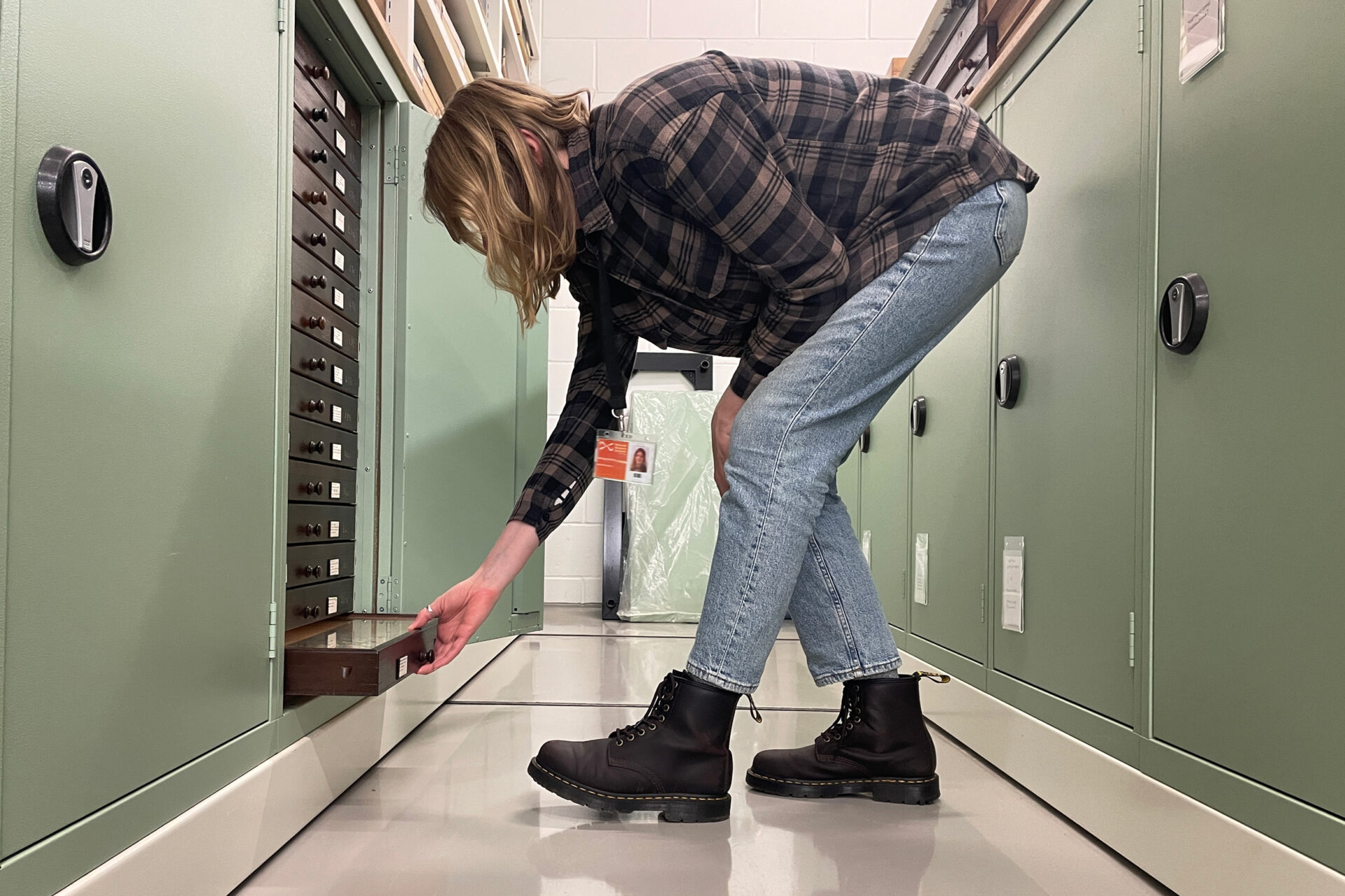
With her Doc Marten boots, flannel shirt, and silver nose ring, Ash Whiffin doesn’t immediately match the stereotype of a Victorian-era butterfly collector.
Her Instagram bio reads: “Bugs & emo beats” — a nod to her love of loud, heavy music and another clue that she is not the tweed-and-tweezer type entomologist most people imagine.
We meet outside the National Museums Collections Centre, a quiet industrial building on the edge of the city that holds an impressive 2.5 million insect specimens. Inside, past security doors and climate-controlled corridors, Ash is the Curator of Entomology, responsible for one of the largest insect collections in the country.
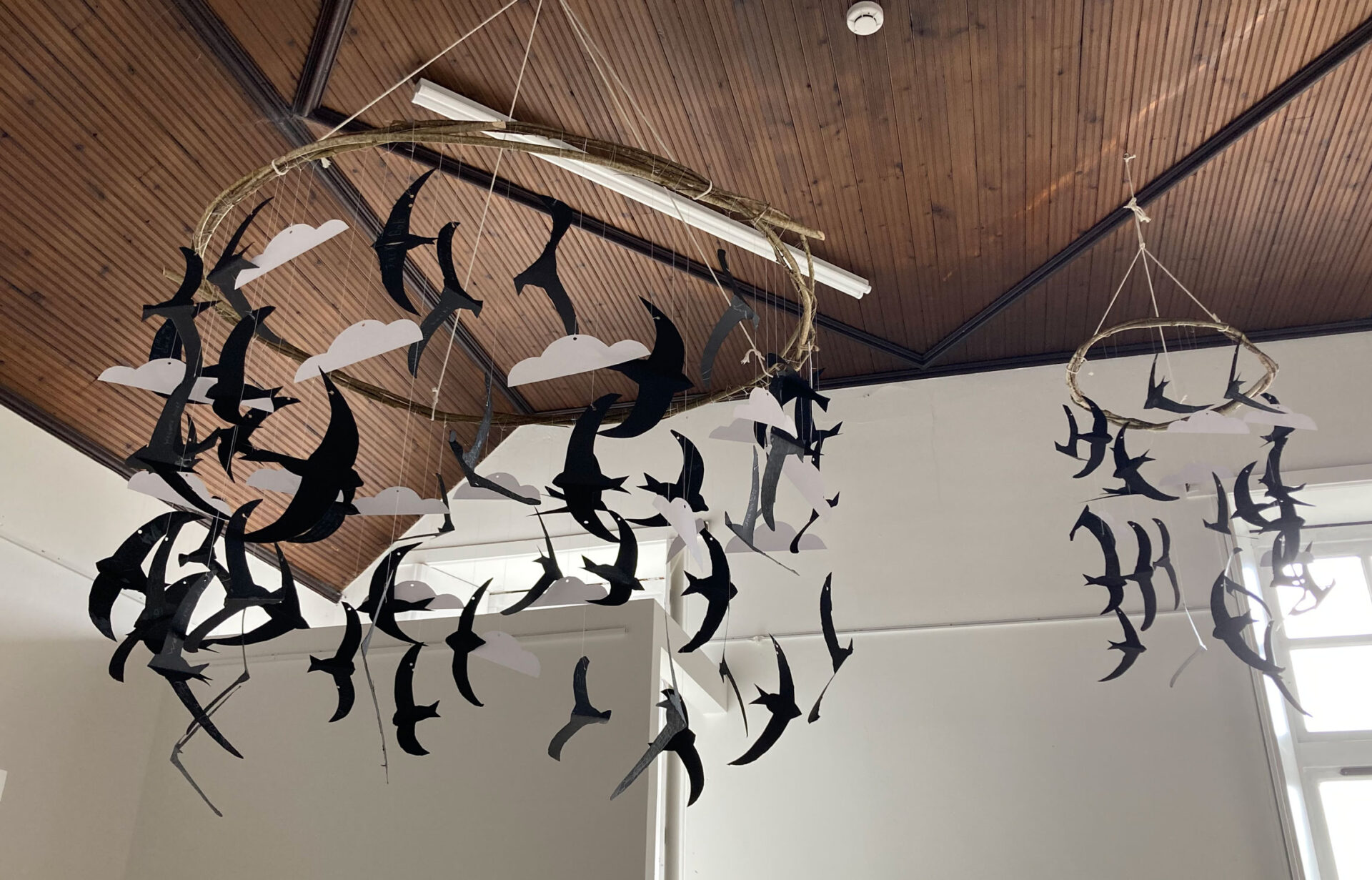
I’m here as part of the early research for Wild Wings of Hope — a new Creative Scotland–funded project that celebrates the migratory birds and insects that move between Scotland and Africa each year. The idea is to trace the threads of connection between species, places, and people — and to tell that story through art and community workshops.
Ash has enthusiastically joined the project in its infancy and will help guide the research and storytelling behind some of the smaller species that we will be spotlighting in this collaborative venture.
Ash begins the tour by introducing me to the friendly staff and volunteers. Each entomologist is focused on something so particular it feels almost mythic. One man is analysing a tray of a subspecies of wasp I’ve never heard of. And another (to my surprise and quiet amusement) is examining the genitalia of a beetle beneath a microscope — a crucial detail for distinguishing between species that appear identical to the naked eye.
They work quietly, heads down, surrounded by pinned specimens, microscopes, archival drawers, field guides, and handwritten notebooks — a deep, absorbing microworld of detail and devotion.
My late father was a lung physician who spent his life researching a specific area of cystic fibrosis. He used to tell me, with genuine awe, “I’m constantly amazed by the incredibly niche areas of knowledge people devote their lives to.” As I stand watching Ash’s colleagues studying these tiny, intricate forms of life — entire careers dedicated to the niche and unseen — I can’t help but think of him, and smile.
“Right then,” Ash says, leading me into the main collections room, “which insects do you want to meet first?”
I pull out my sketchbook and begin listing some of the species that first drew me into this project. I notice a spark light up in her when she hears the list — as if she welcomes the chance to dive into drawers she hasn’t opened in a while. She clearly loves sharing this collection, and she moves through the space with the kind of ease and affection people reserve for old friends.
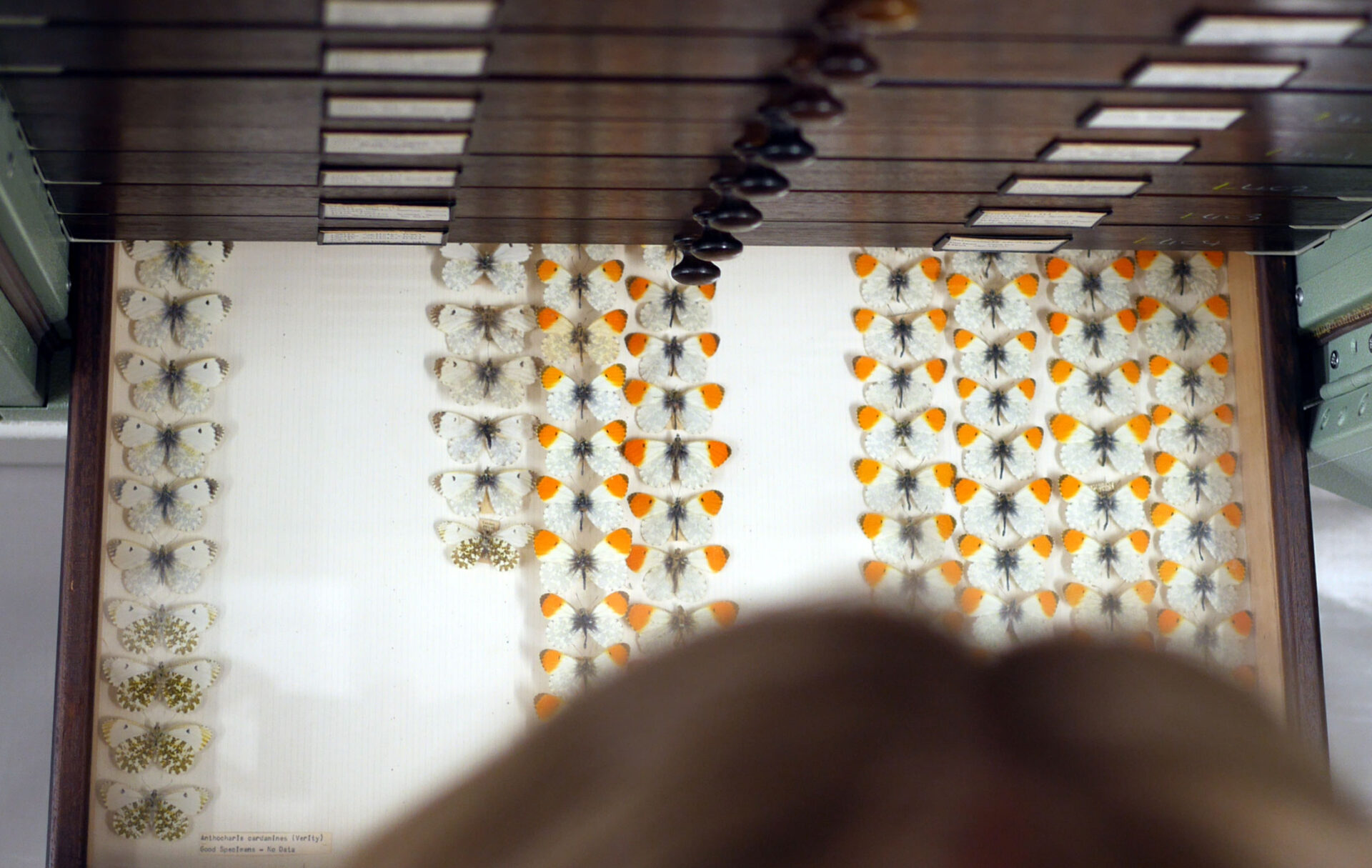
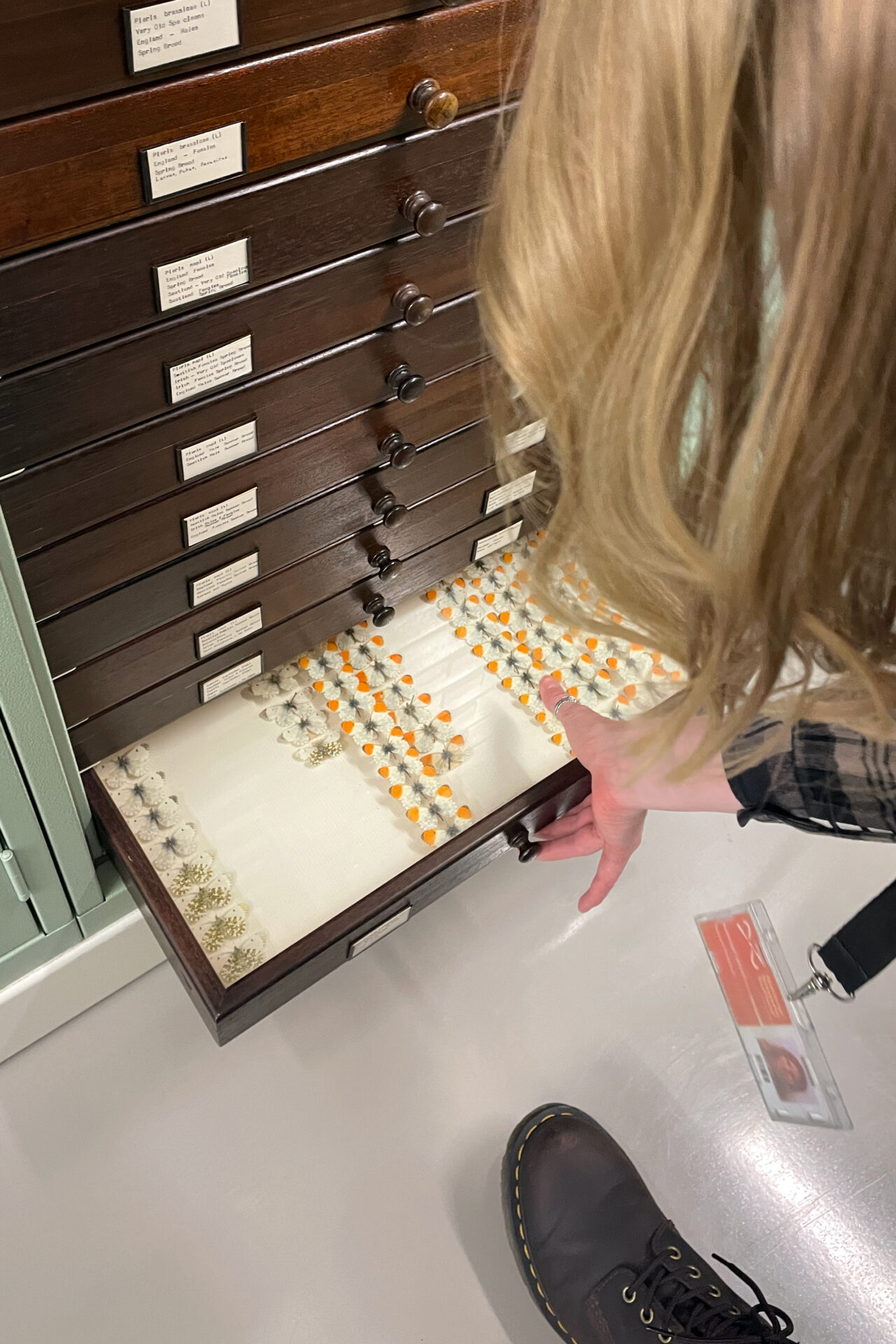
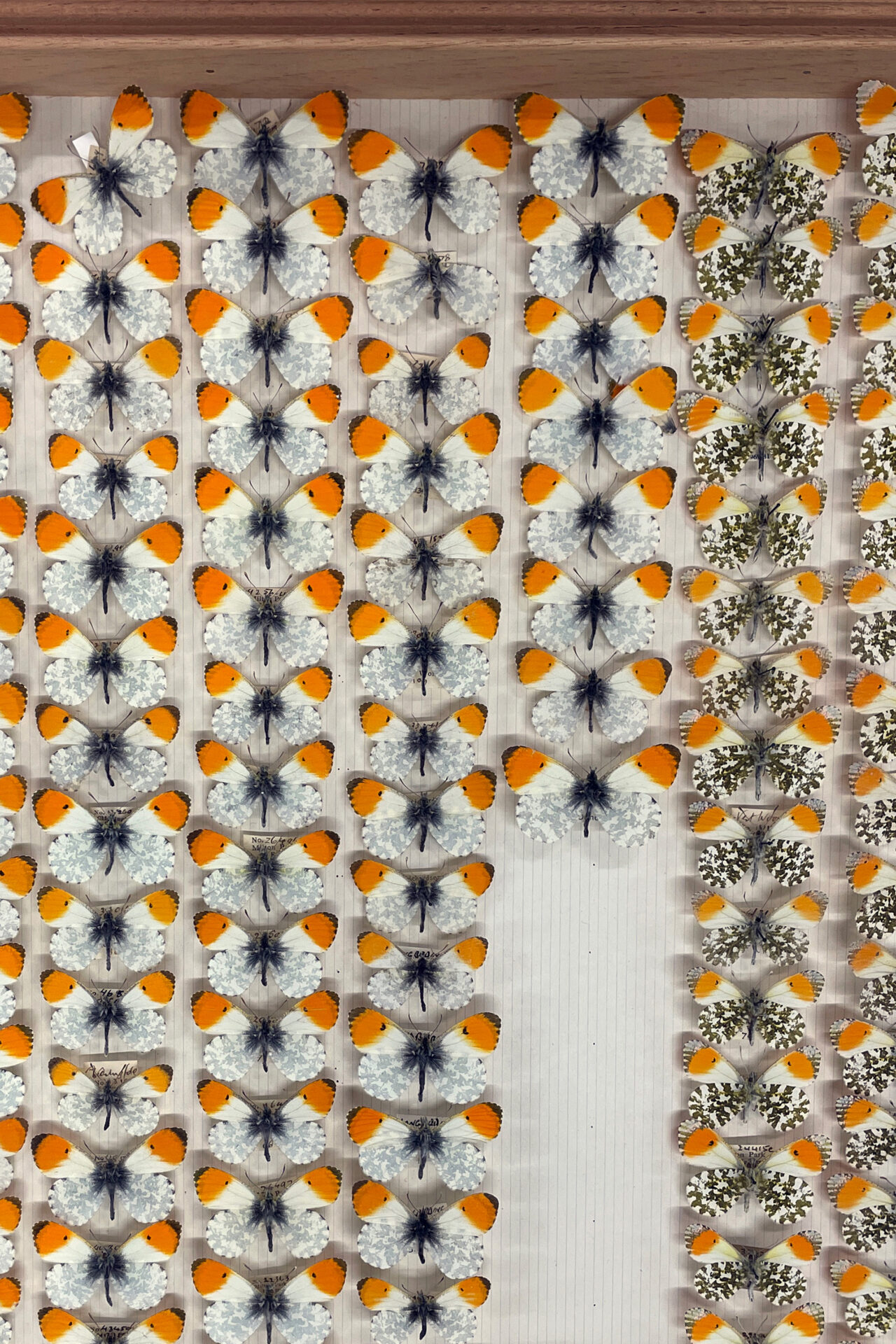
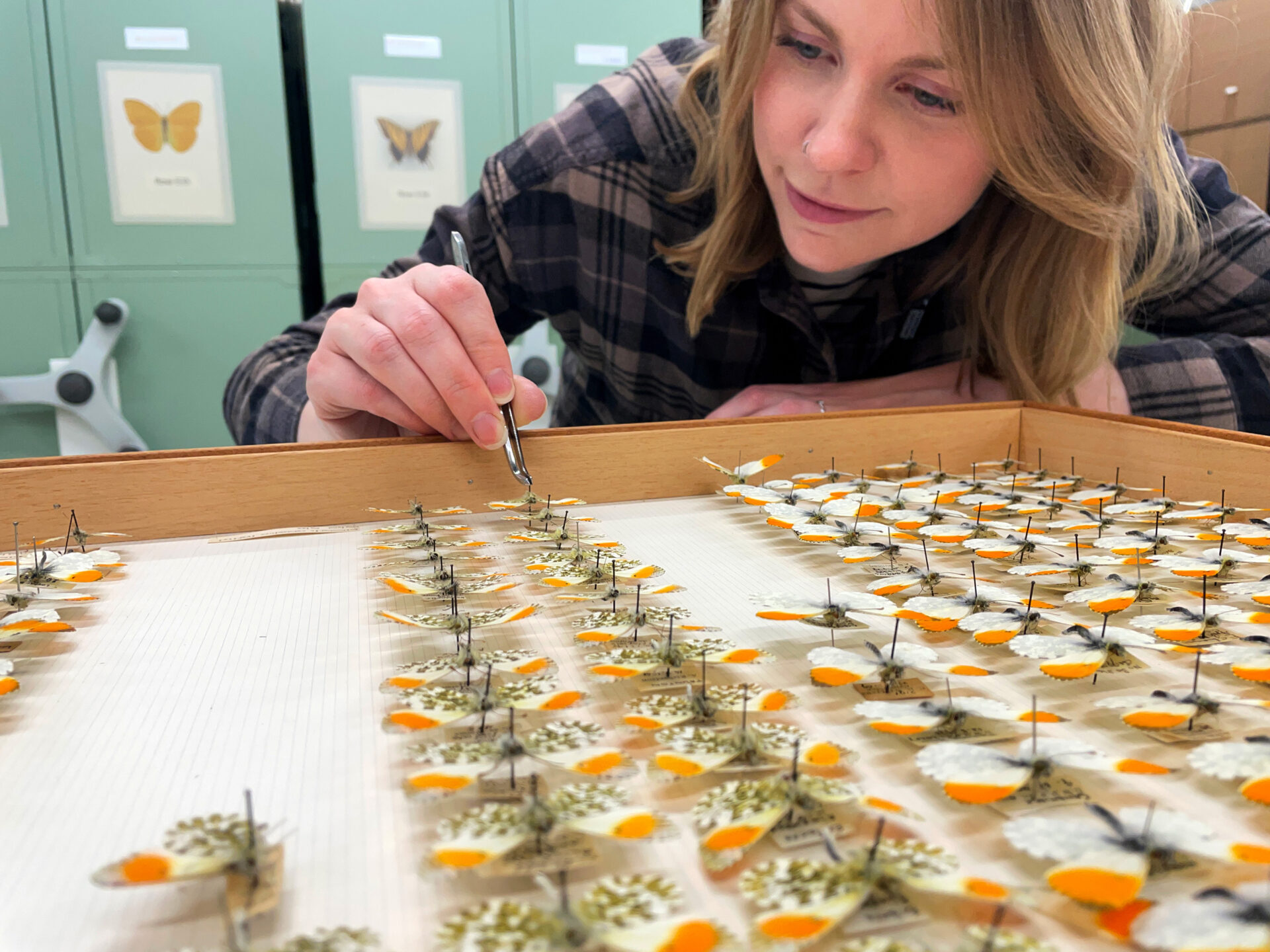
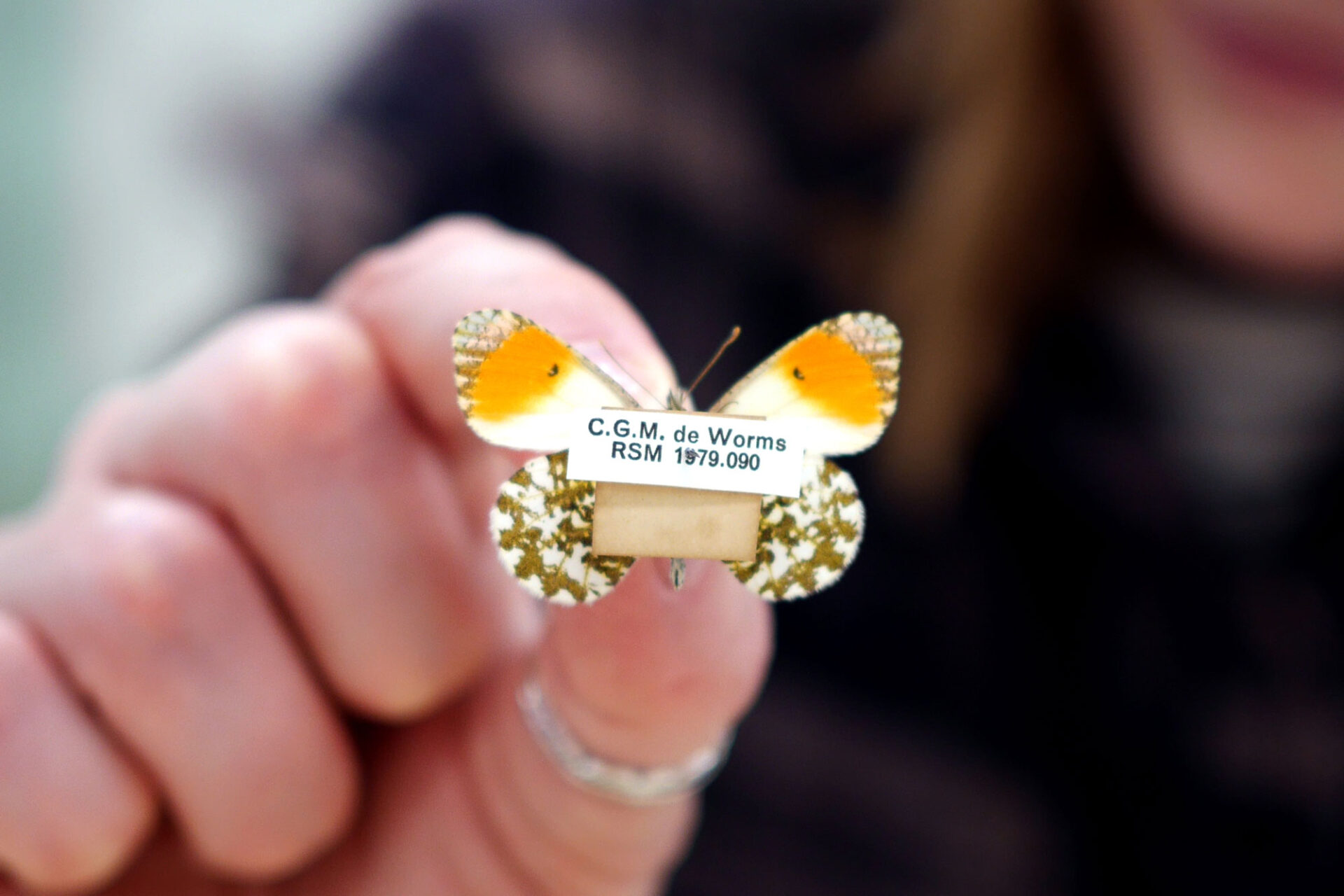
Ash stops, selects a cabinet, and slides open a long, shallow drawer. Inside is a neat array of orange-tip butterflies — the males with their vivid orange forewings and mottled green underwings; the females, quieter, almost entirely white.
My designer-brain can’t help but appreciate the lettering and typography upon the tiny specimen labels pinned beneath each butterfly — the species name, the exact location it was collected, the date, and sometimes the collector’s initials. Each label is a miniature archive of where each butterfly once flew.
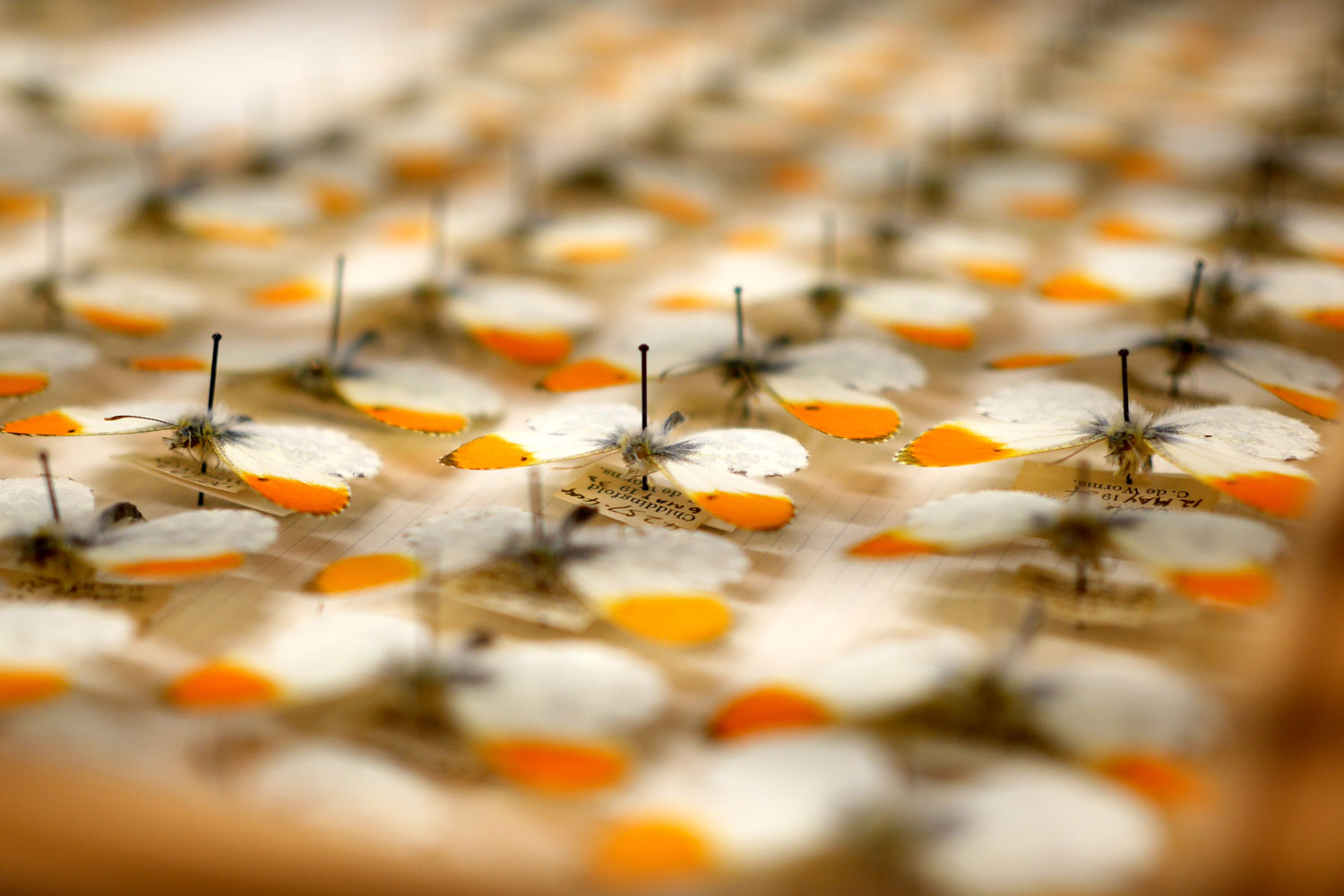
To me, growing up in South Wales, the orange-tip always felt like a signal of spring’s return — fleeting, bright, and gone before you know it. But here in Scotland, where this butterfly was once scarce, its story is changing.
Warmer seasons have allowed the species to extend its range northward, and in recent years, orange-tips have been appearing in places they were rarely seen before. It’s a quietly hopeful shift — not the usual climate narrative of loss, but a reminder that some species do adapt, move, and find new footholds. A story of resilience, happening in hedgerows and roadside verges just beyond the city of Edinburgh, where I now reside.
In natural history collections, as in nature, it’s usually the flashier males that get the attention.
“The females don’t need to be as showy,” Ash says, lifting one gently by the pin. “They’re not competing in the same way. But because of that, they’re often overlooked. In natural history collections, as in nature, it’s usually the flashier males that get the attention.”
As time has passed and we have spent more time working together, I’ve come to understand something about Ash: she is a quiet but steady feminist in a field historically shaped by Victorian men with nets. Her work isn’t just about preserving insects; it’s about making space — for different voices, different bodies, different ways of seeing.
In that, a different kind of hope begins to take shape — one rooted in attention and care. A hope that meets the world not with dominance, but with room for others to exist. And in a time marked by division and exclusion, this feels more necessary than ever.
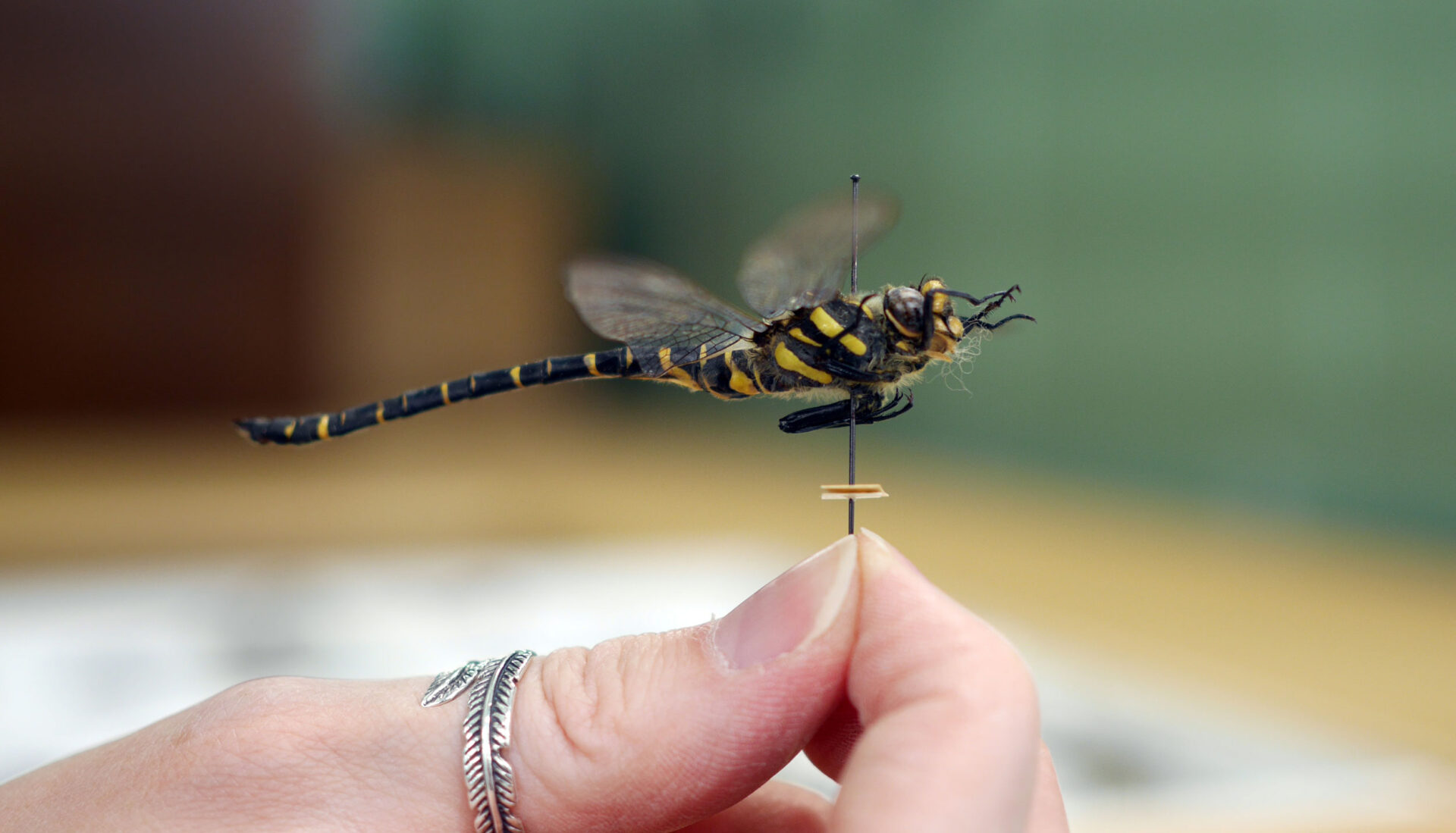
Eventually, I ask her the question that’s been growing all afternoon. “Ash… if I were to ask you to choose one insect, which would be your favourite?” She takes a moment to pause, then replies, “It would have to be carrion beetles. They were literally the reason I got into this work.”
Ash leads me down a corridor labelled with Scientific family names I don’t recognise, and slides open drawer after drawer containing rows of Burying beetles, dung beetles, maybugs, and other species common in Scotland.
“Before becoming an entomologist, I actually wanted to go into forensics,” she says. “I’ve always had a fascination with death. And then I learned about carrion beetles — how they decompose bodies, and return everything to the soil. They make space for new life to grow.”
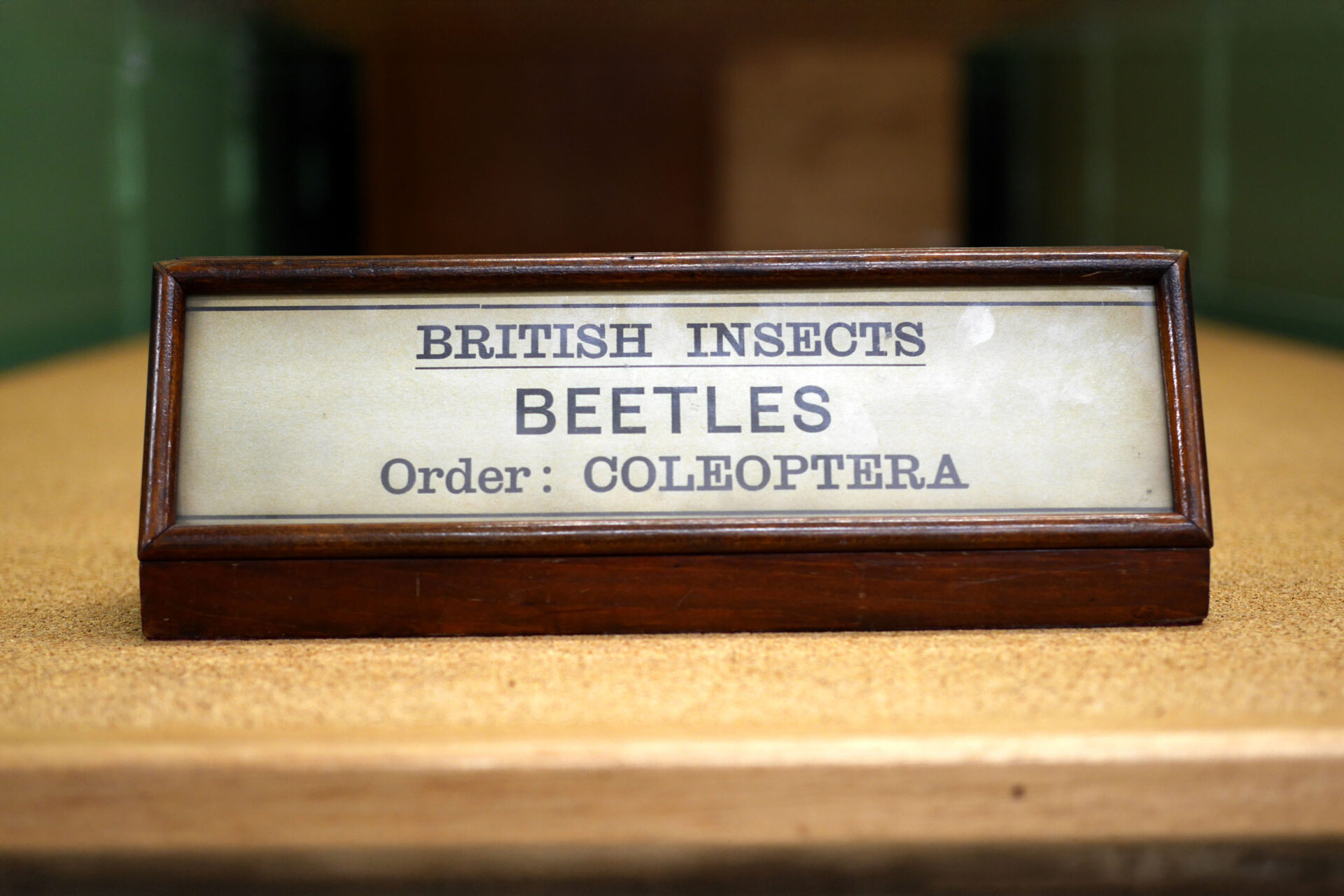

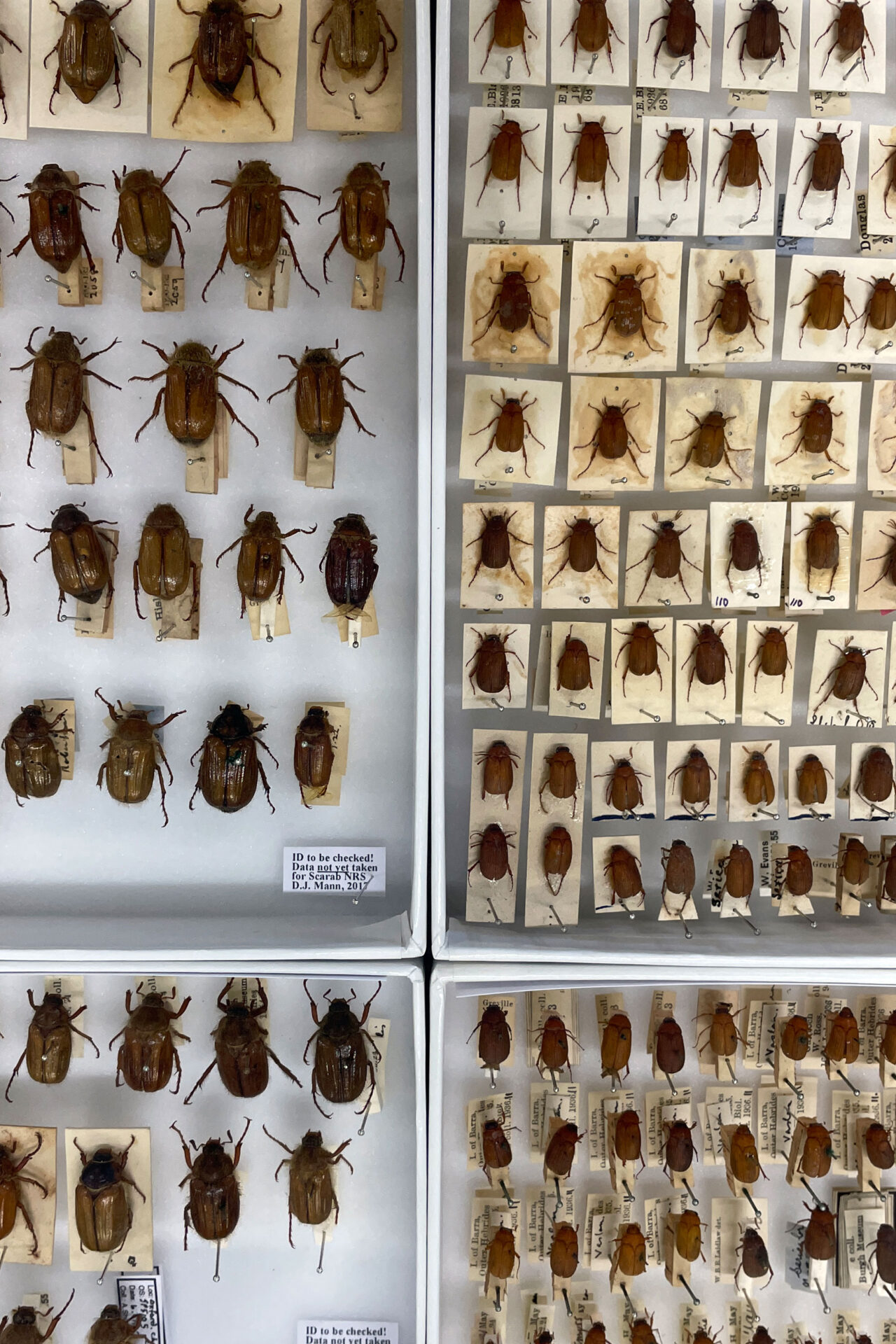
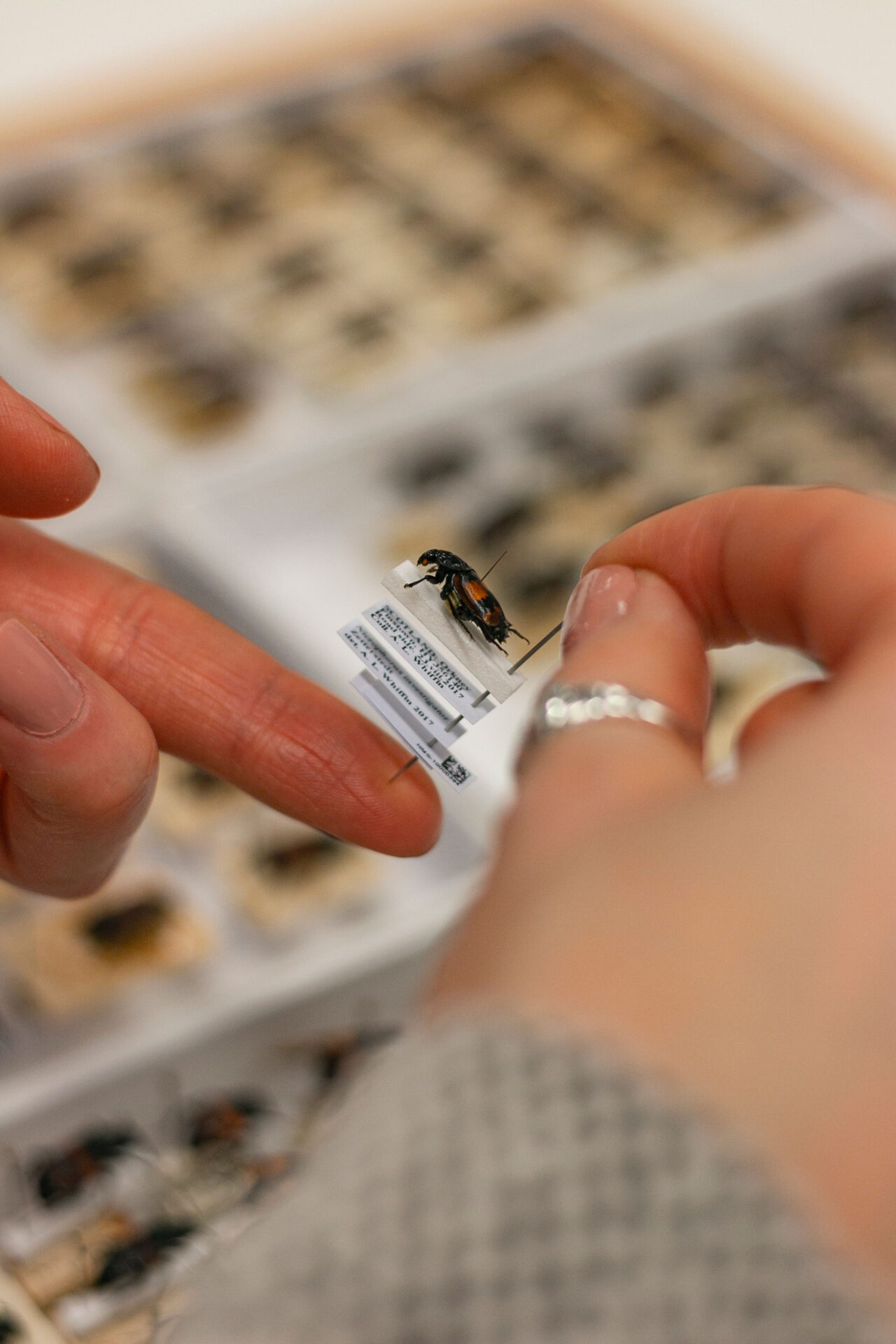
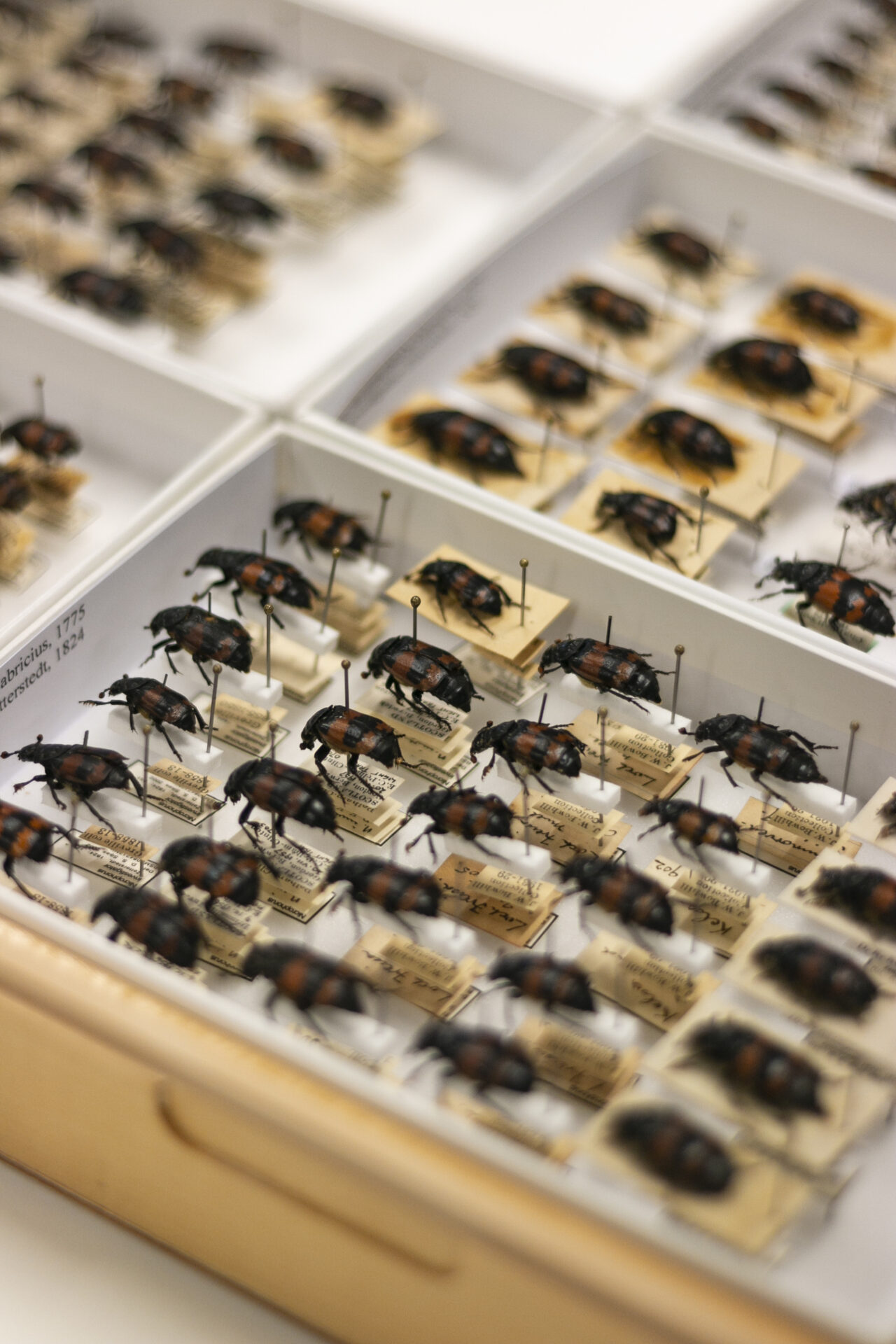
Burying beetles are iconic in Scottish woodlands. They work with fungi and microbes to clean, decompose, they return, they begin again. They do the essential work – so essential to the cycles of nature. An unsung worker, holding the quiet centre of things. Just as the beauty of its beetle wings remain hidden under its armour.
I make a mental note to myself: this one belongs in the project too. Not as a hero, or a centerpiece, but simply as what it already is — quiet and necessary.
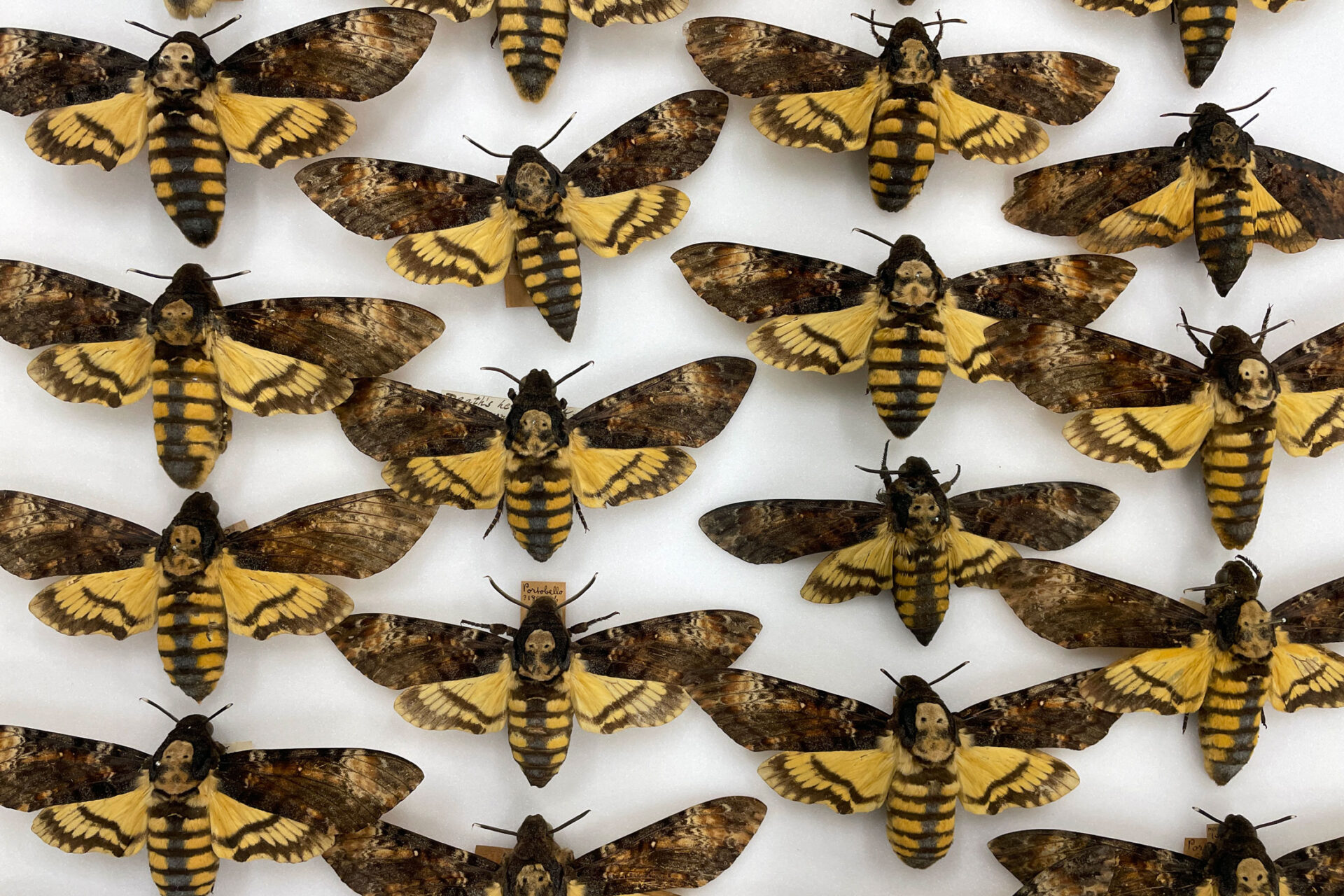
Introducing the death’s head hawkmoth
Next, Ash leads me to a drawer containing the death’s-head hawkmoth — large, heavy-bodied, with wings the colour of bruised smoke and a pale marking on its thorax that resembles a human skull. This species was made famous by the classic 90s horror film, The Silence of the Lambs — but this moth has had a place in folklore long before Hollywood discovered it.
In Europe, the death’s head hawkmoth was once regarded as an omen of misfortune or death. Not a surprise, really, given its unique and unusual markings. However, in parts of West and sub-Saharan Africa, it appears in stories of night visitors and shape-shifters, creatures that move between worlds unseen.
Two continents, the same insect — yet held in entirely different meanings. Fear in one place, transformation or quiet familiarity in another. It’s a reminder of how stories shape perception, and how the same species can carry several myths and truths.
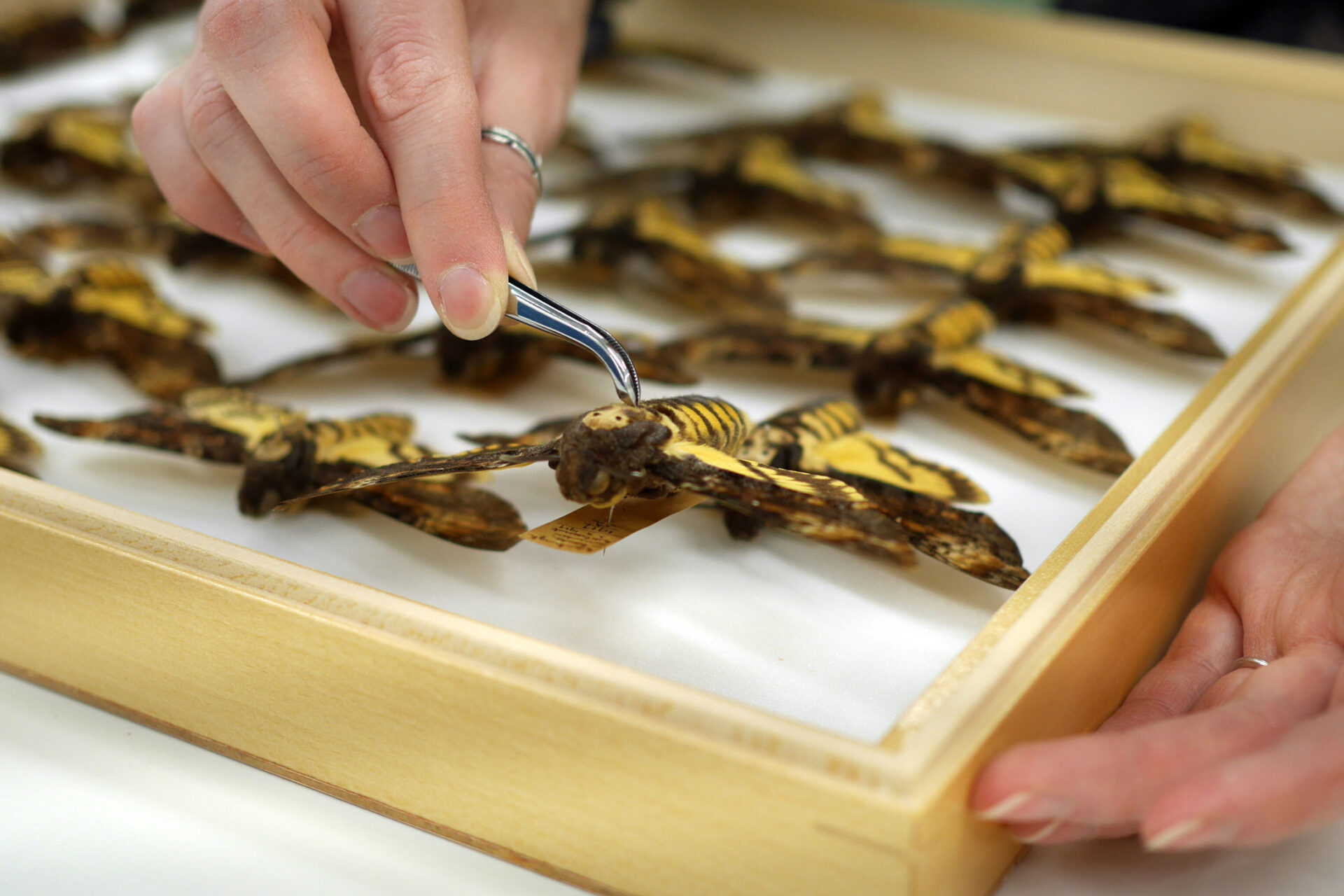
The death’s-head hawkmoth is not a common sight in Scotland, but each year a few individuals migrate north from Africa and southern Europe, carried on warm winds and instinctive trajectories older than maps. It is a reminder that migration is not only the domain of birds — insects travel too, quietly crossing entire continents, unseen and unrecorded, their journeys held over generations in muscle memory and wingbeat.
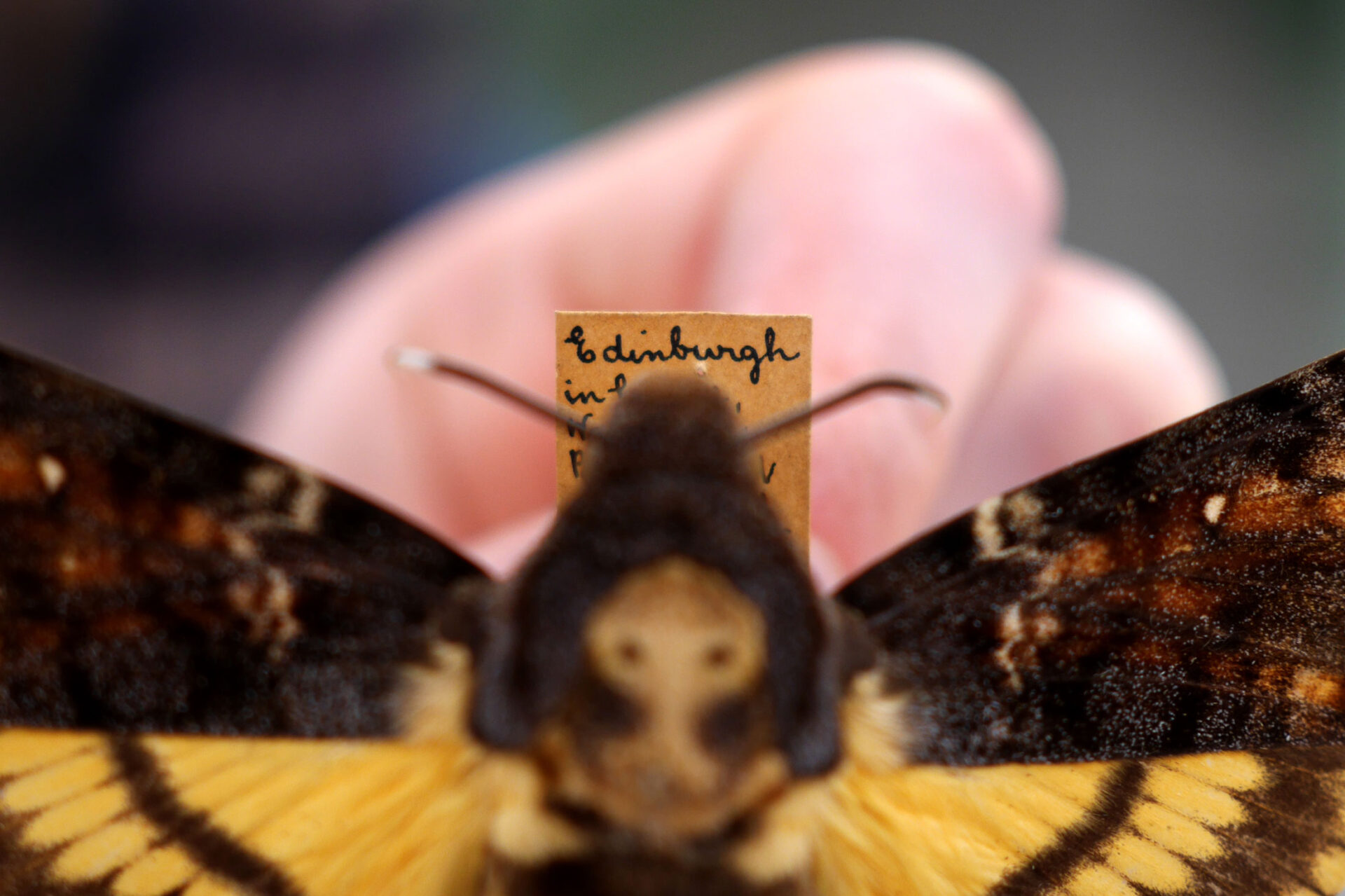
Interweaving ecology with folklore
This is where Chief Gift Amu, one of the collaborating storytellers for Wild Wings of Hope, comes in — allowing multiple understandings to sit side by side without needing to collapse into a single story. Gift has cultural roots in Ghana, where the death’s-head hawkmoth is part of everyday life — not feared, but simply understood as a guest of the beehive, recognised as a night visitor that slips quietly toward sweetness, following the scent of honey.
Together with Ash’s entomological knowledge and my papercut artwork, the project begins to form its own shared language — a rich interweaving of ecology, folklore, and craft.
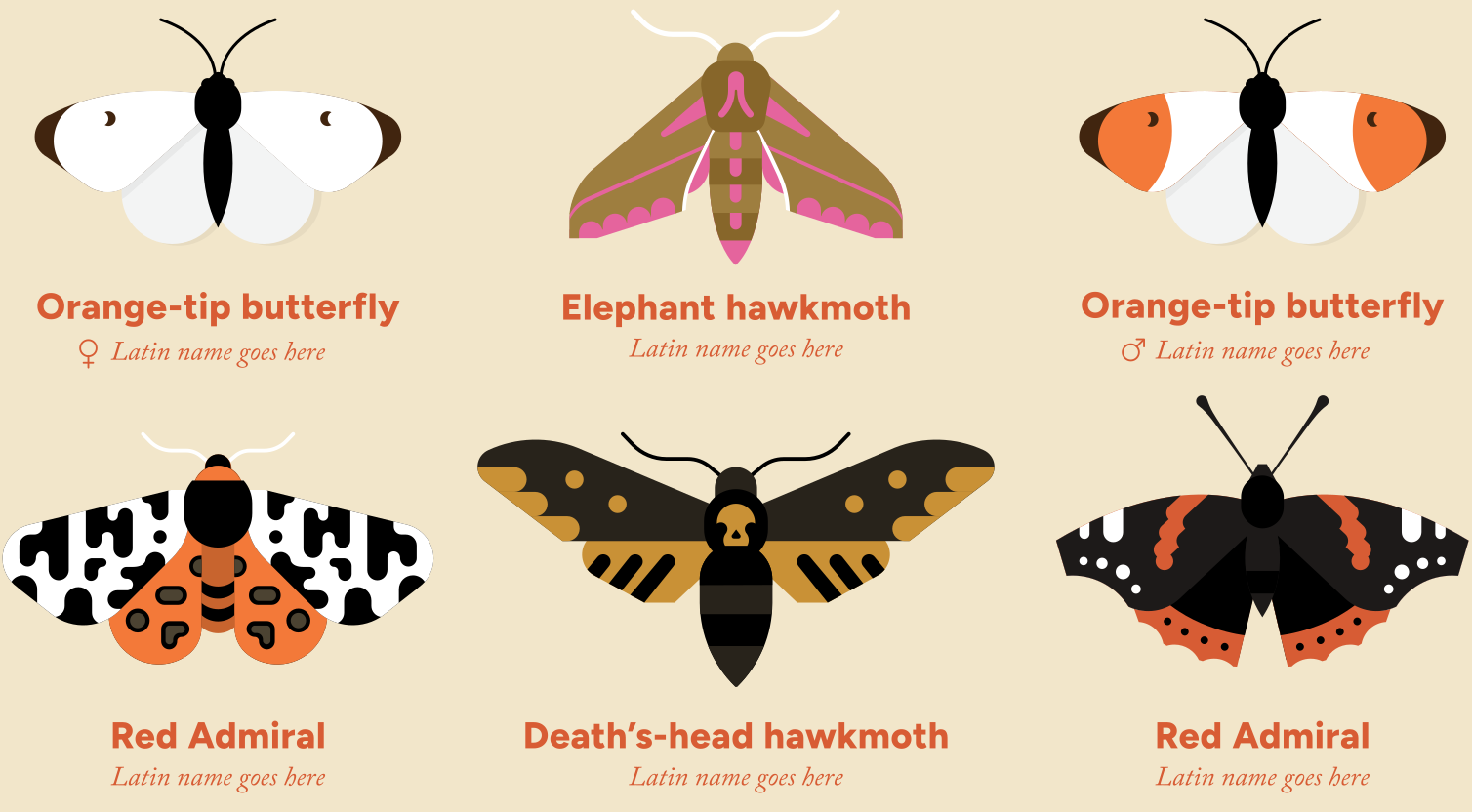
This is Wild Wings of Hope: diverse, collaborative, collective. And as the collection of papercut artworks and stories grows through shared exhibitions and workshops, it invites others to join in — to make, to learn, and to connect with the winged lives that move through our skies. I’m grateful to be walking this path alongside Ash, Gift, and other collaborators with our aligned values and vision.
We are at the beginning of a long and exciting venture.
Thanks for reading and being on this journey with us.

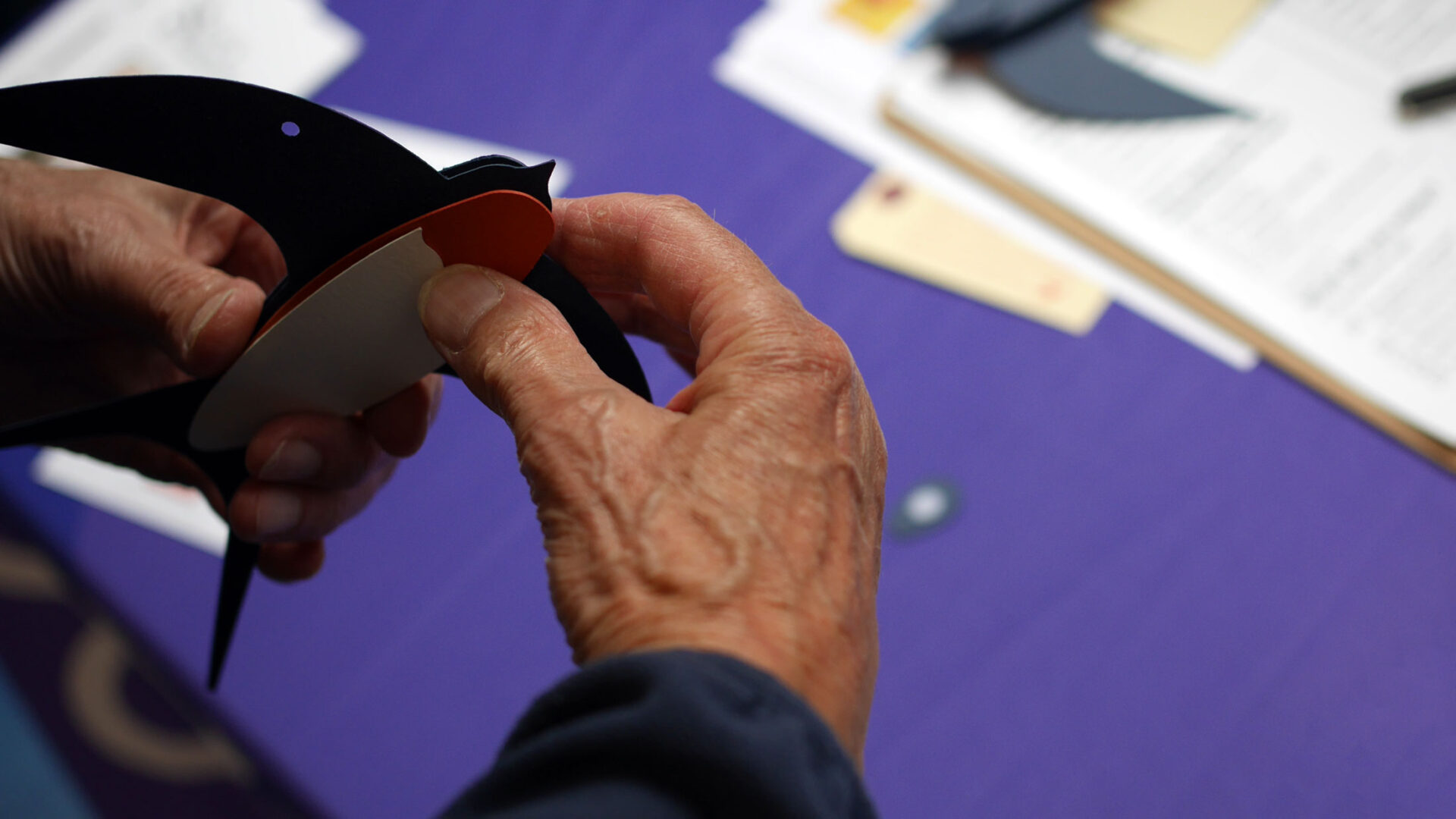
Our first feedback session in an NHS setting
A test flight for the Wild Wings of Hope AR prototype, in collaboration with RSPB Scotland—exploring how craft, storytelling and technology can support nature connection in care.
4