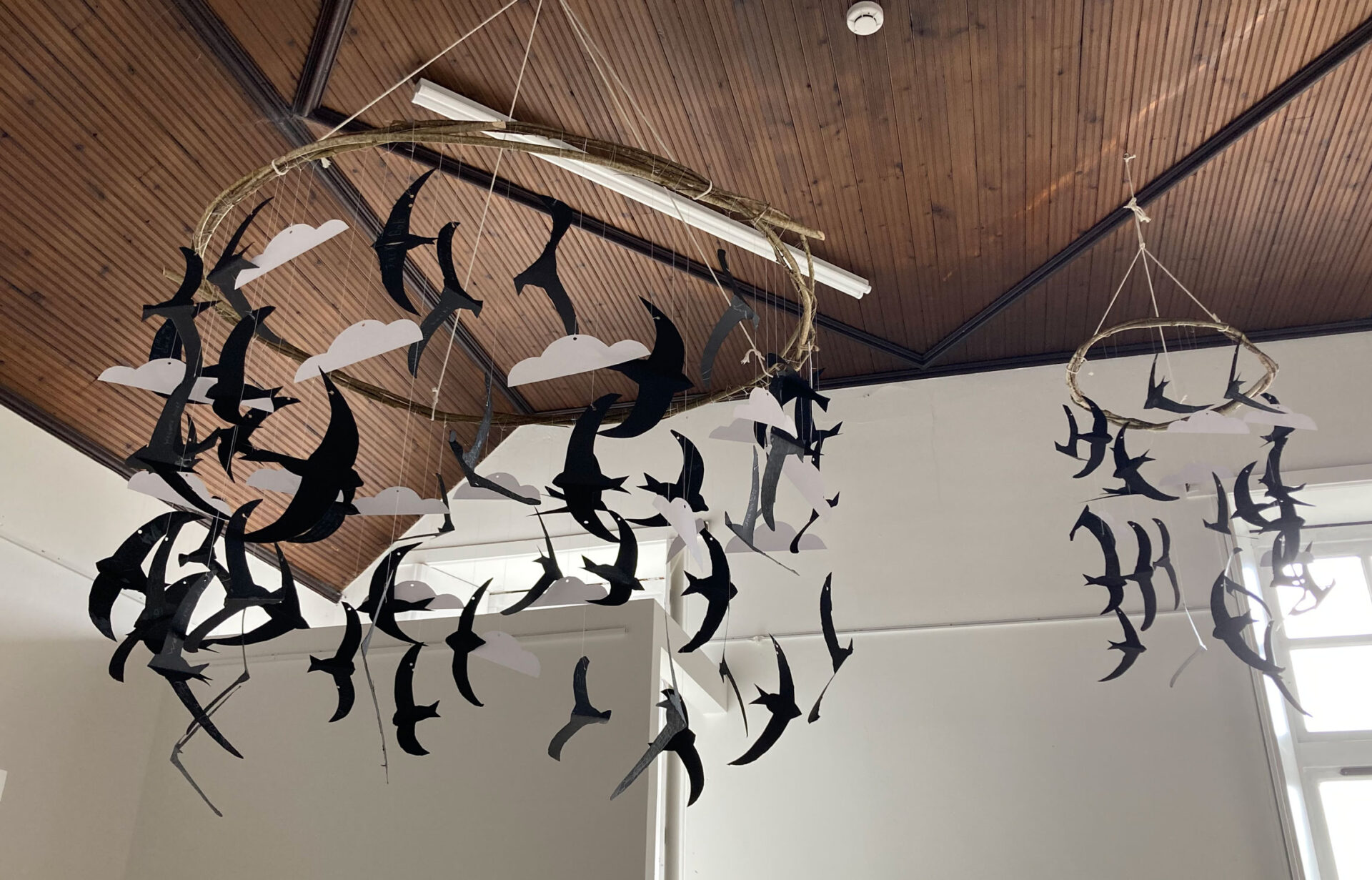
I’ve been collaborating with two traditional storytellers whose practices bring together folklore, ecology, and rhythm within Wild Wings of Hope.
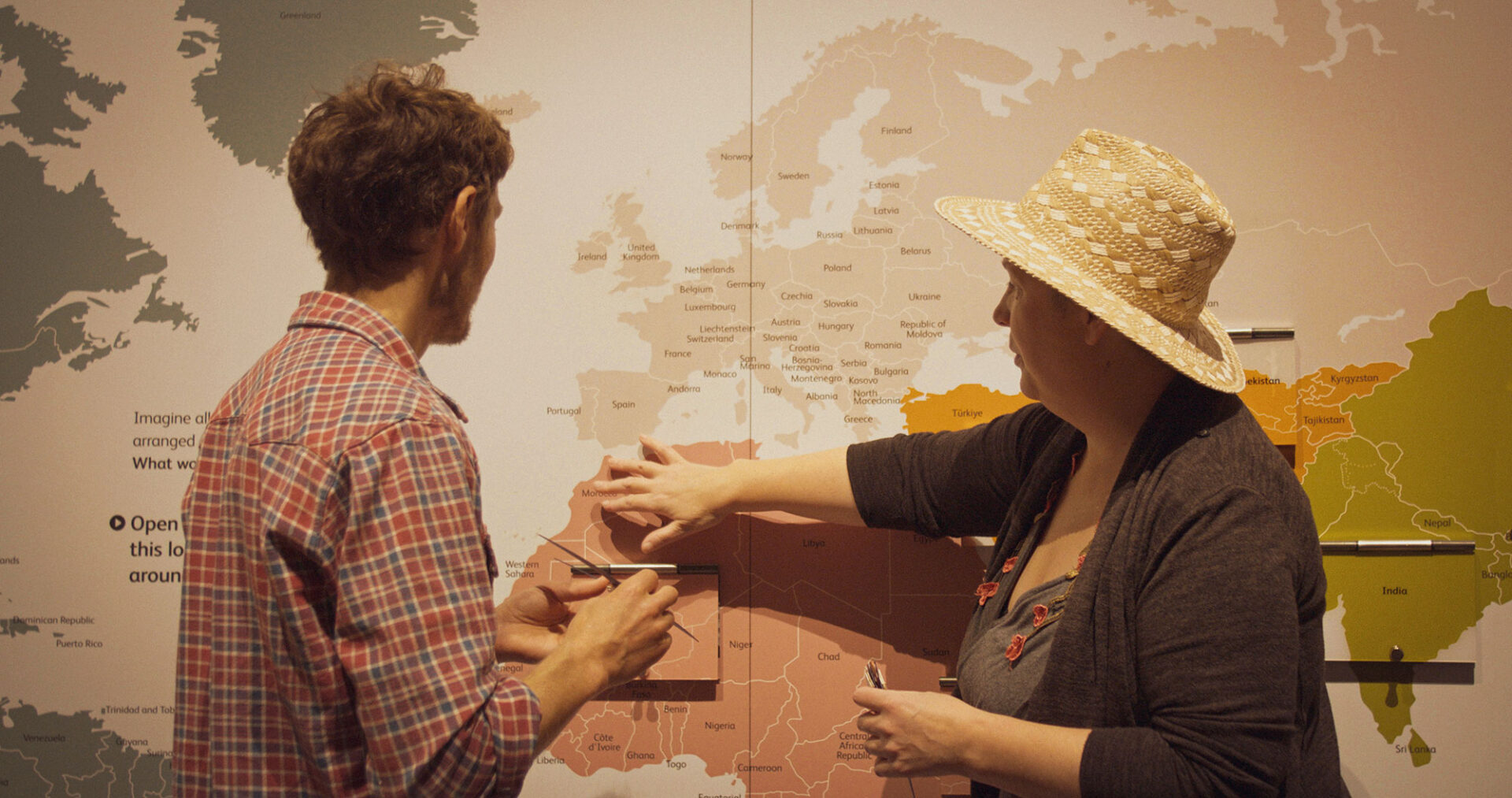
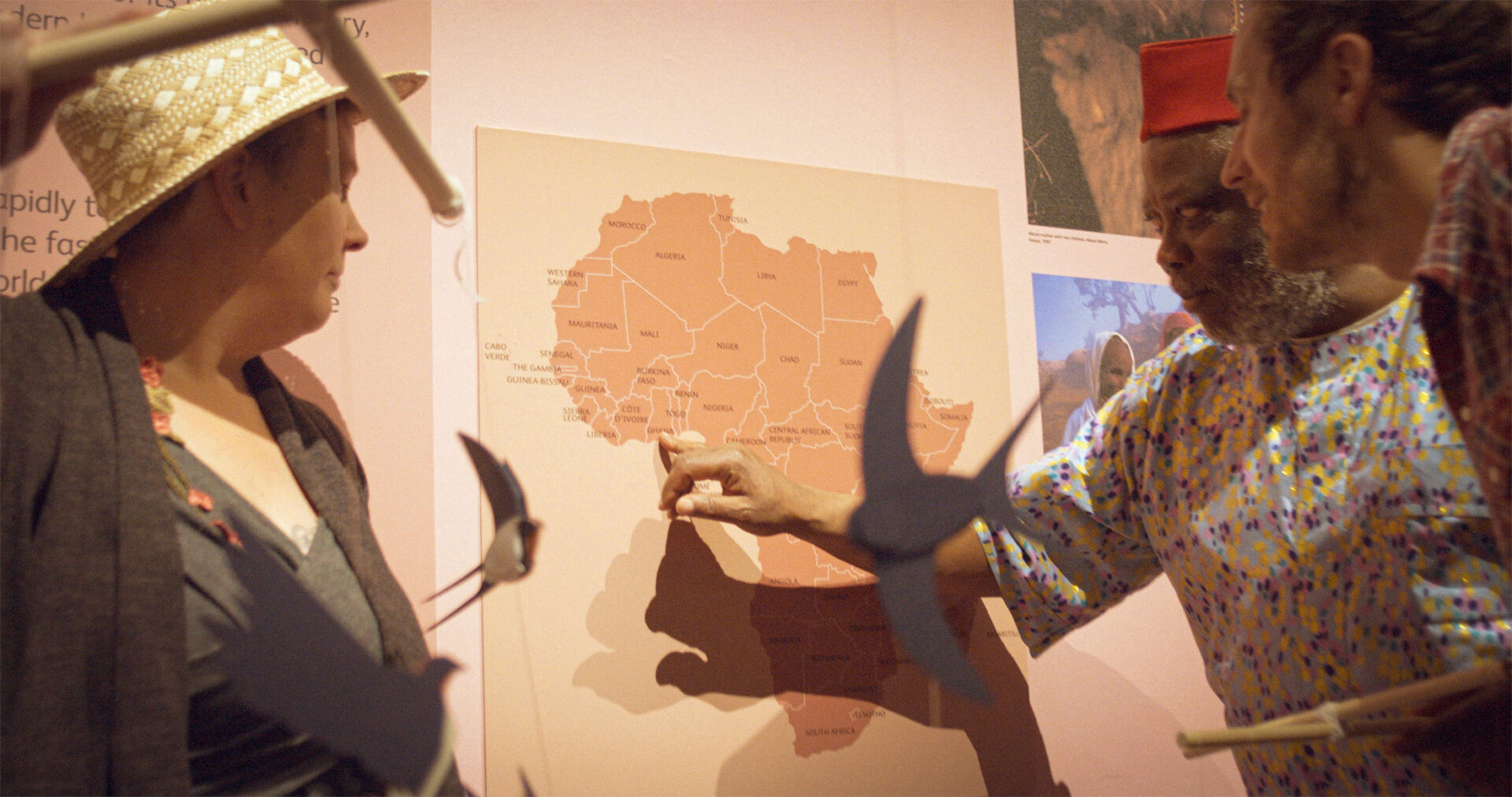
Chief Gift Amu and Cara Silversmith, with cultural roots in Africa and Scotland respectively, bring complementary skills to the project. They are helping to bring the migration of Swifts and Swallows to life alongside my papercut work, shaping both the narrative and participatory elements of the project.
Together, we will bridge local and global stories of migration, biodiversity, and belonging to engage diverse audiences across community settings and care environments through interactive storytelling that is accessible for all ages.


Gift Amu: contributing rhythm & Sankofa
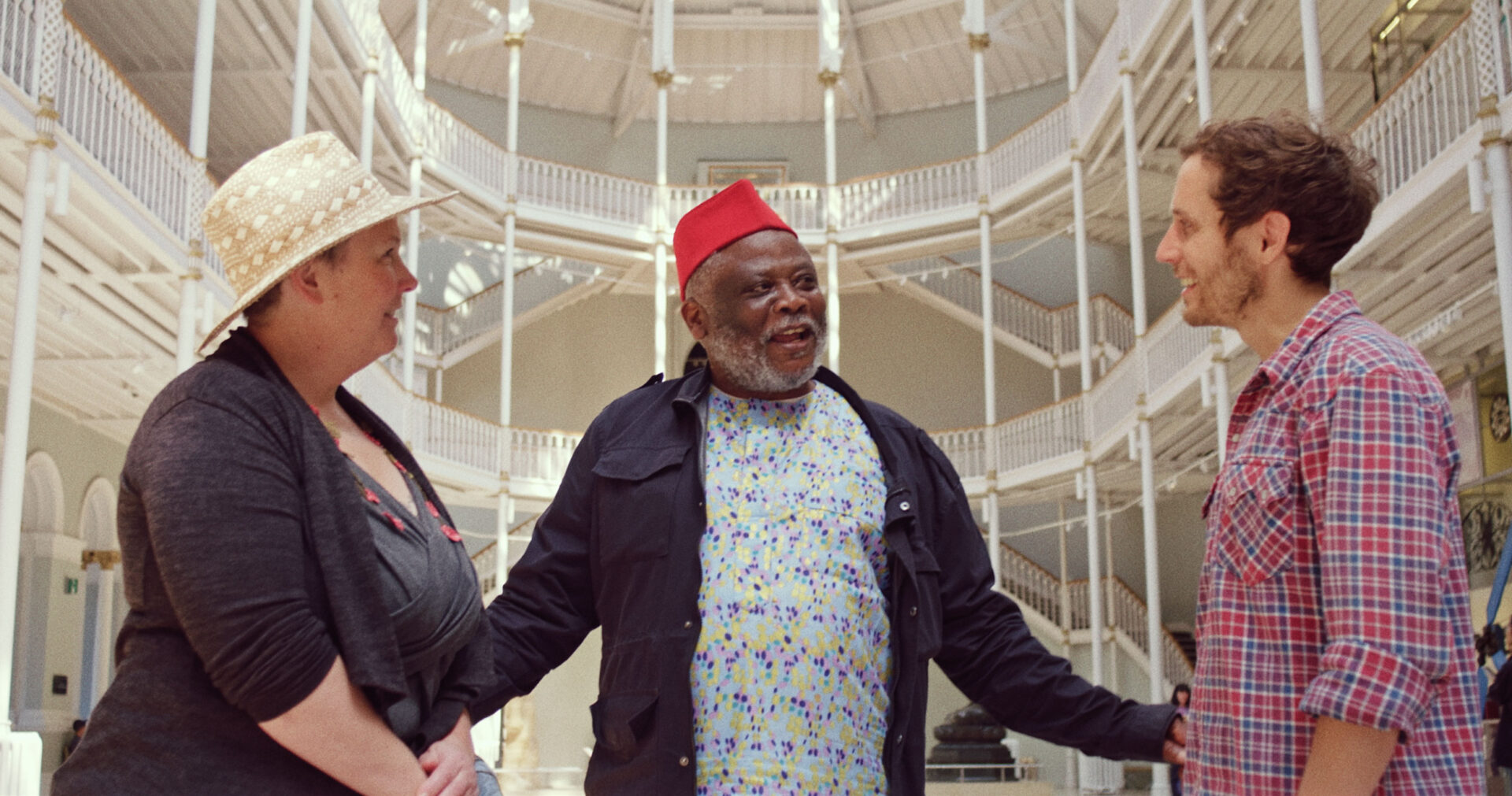
Gift Amu is a musician, master folklorist, and performance artist whose work draws on oral traditions, embodied storytelling, and cultural frameworks rooted in his Ghanaian heritage.
Chief Gift Amu has introduced a powerful guiding concept to our collaboration: Sankofa.
Rooted in the traditions of the Akan people of Ghana, Sankofa is represented by a bird whose feet face forward while its head turns back, holding an egg gently in its beak. Gift explained its meaning clearly: “Sankofa translates to ‘go back and fetch it’. We must collectively look back to where we came from—only by returning to what has been left behind can we understand the present and shape the future.”
The symbol holds particular resonance. The bird, moving forward while looking back, speaks to continuity and responsibility—progress that remains in dialogue with memory. The egg represents possibility—knowledge, memory, and potential—something fragile yet full of life, capable of becoming many things.
It is a symbol of hope.
And we are now weaving the principle of Sankofa into our project narrative.

We must collectively look back to where we came from—only by returning to what has been left behind can we understand the present and shape the future.
We are living in a time when the world can feel as though it is moving backwards in many ways. Systemic racism, entrenched colonial power structures, environmental misinformation, and increasingly polarised views that narrow our sense of the future.
The idea of Sankofa offers a way through.
It suggests that progress does not always mean pushing forward blindly, but taking the time to pause, look back, and reclaim what has been overlooked or forgotten.
Within Wild Wings of Hope, the principle of Sankofa becomes both a storytelling framework and a guiding philosophy: to honour what came before, to learn from it, and to carry those lessons forward with care.
Cara Silversmith: Ecological storyteller
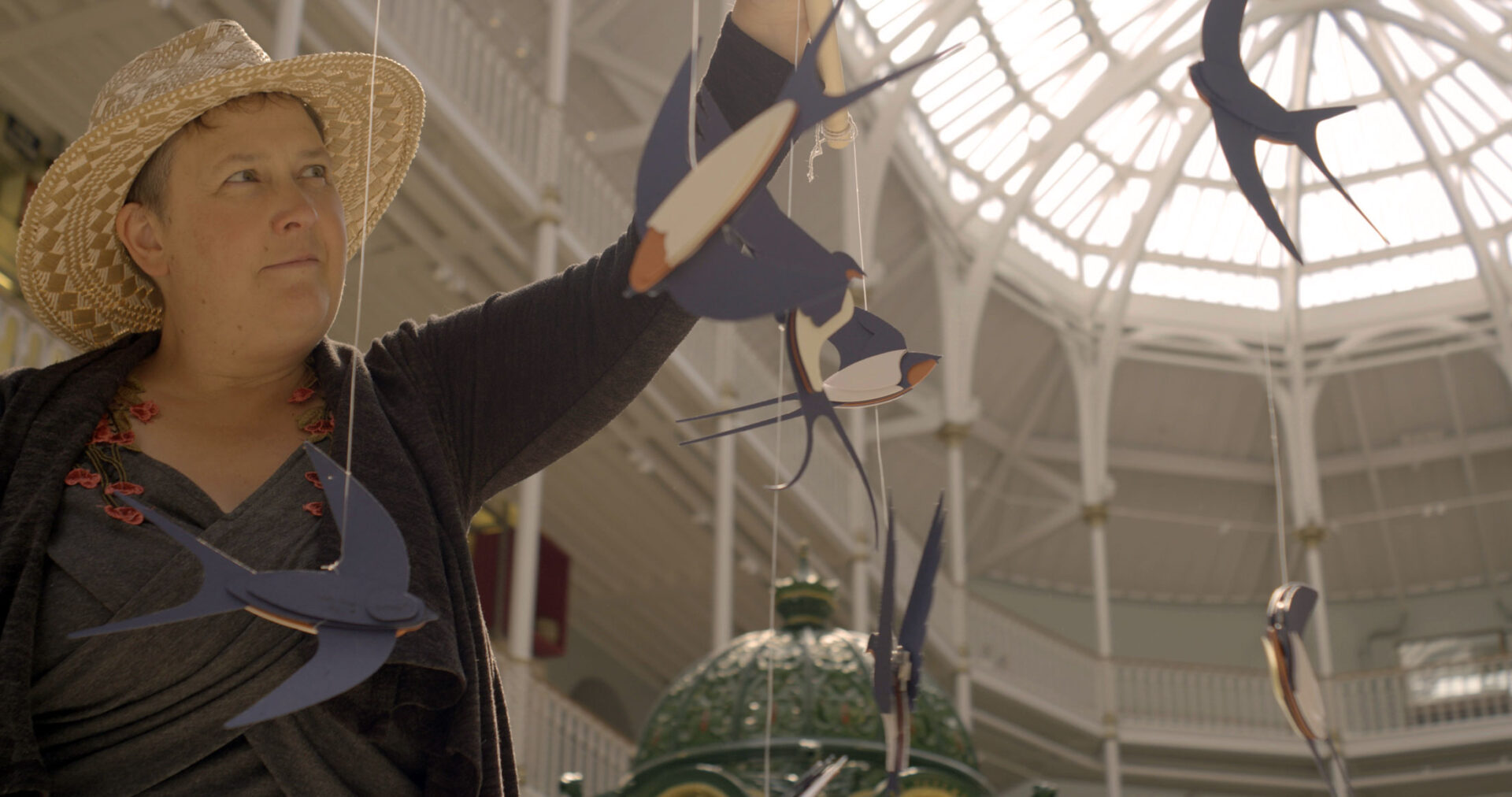
Cara Silversmith is a vibrant storyteller who brings the world alive through words. She weaves her deep knowledge of biodiversity into her storytelling, integrating Celtic myths rooted in themes of nature connection.
There could be no more fitting collaborator for Wild Wings of Hope.

Cara has been developing an engaging educational narrative that explores the migration of Swallows and Swifts between Scotland and Africa, as they navigate landscapes, winds, human impacts, weather systems, and fragile ecosystems.
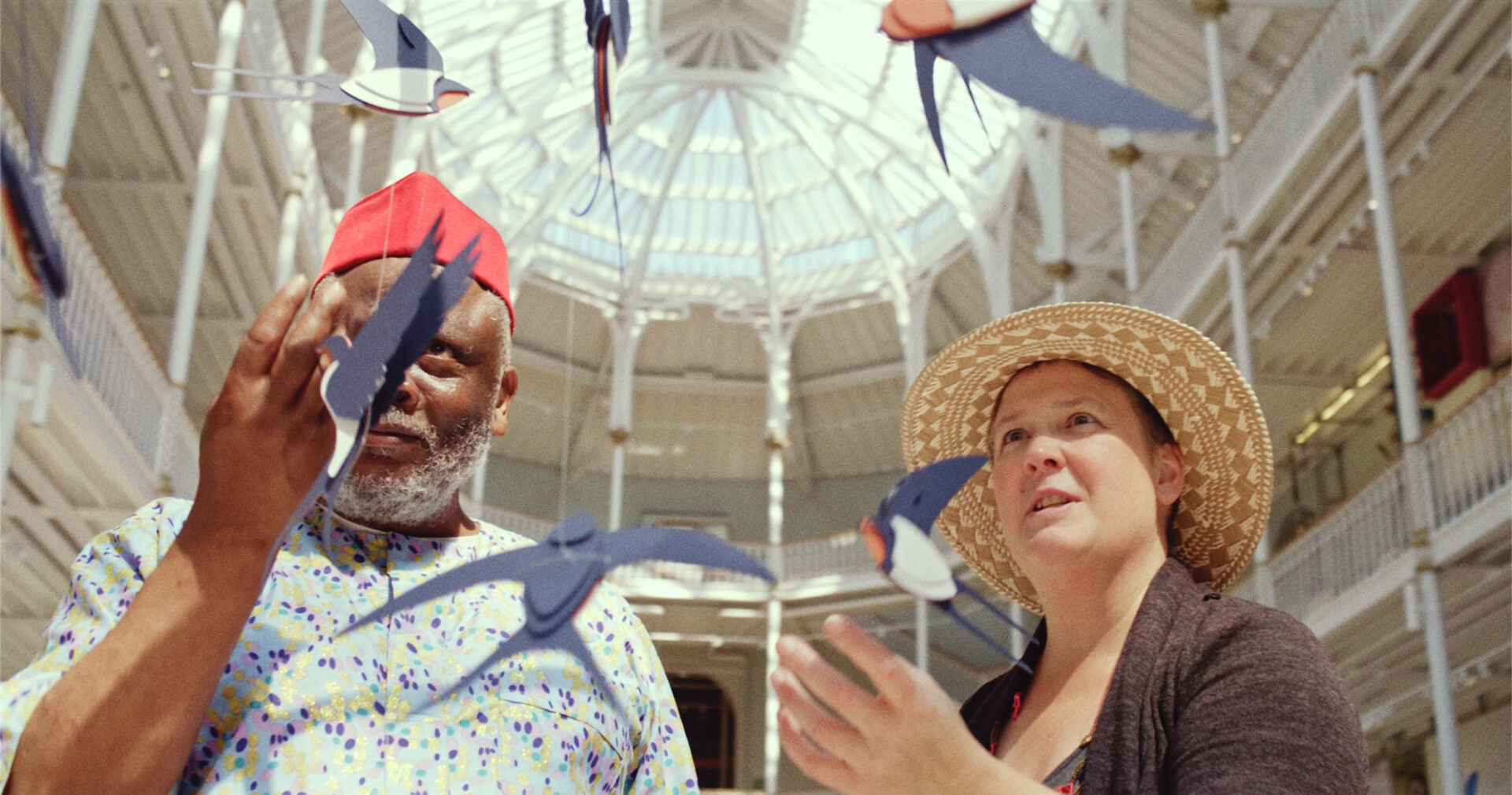
She will also use my papercut birds as tactile storytelling tools within performances, animating a handheld Barn Swallow mobile to trace routes through the air.
As the story unfolds, the birds will move—literally bringing the migration to life.
Bringing it together
Together, Gift Amu and Cara are leaning into their distinct strengths — folklore, ecology, rhythm and song — allowing a unique story to evolve across creative disciplines and cultures.
As we prepare for our upcoming autumn workshops, these shared ideas are bringing the project to life.
Through rehearsals and early trials, we are shaping an interactive performance that feels vivid and memorable — one that invites audiences not just to listen, but to participate in the magic of storytelling.
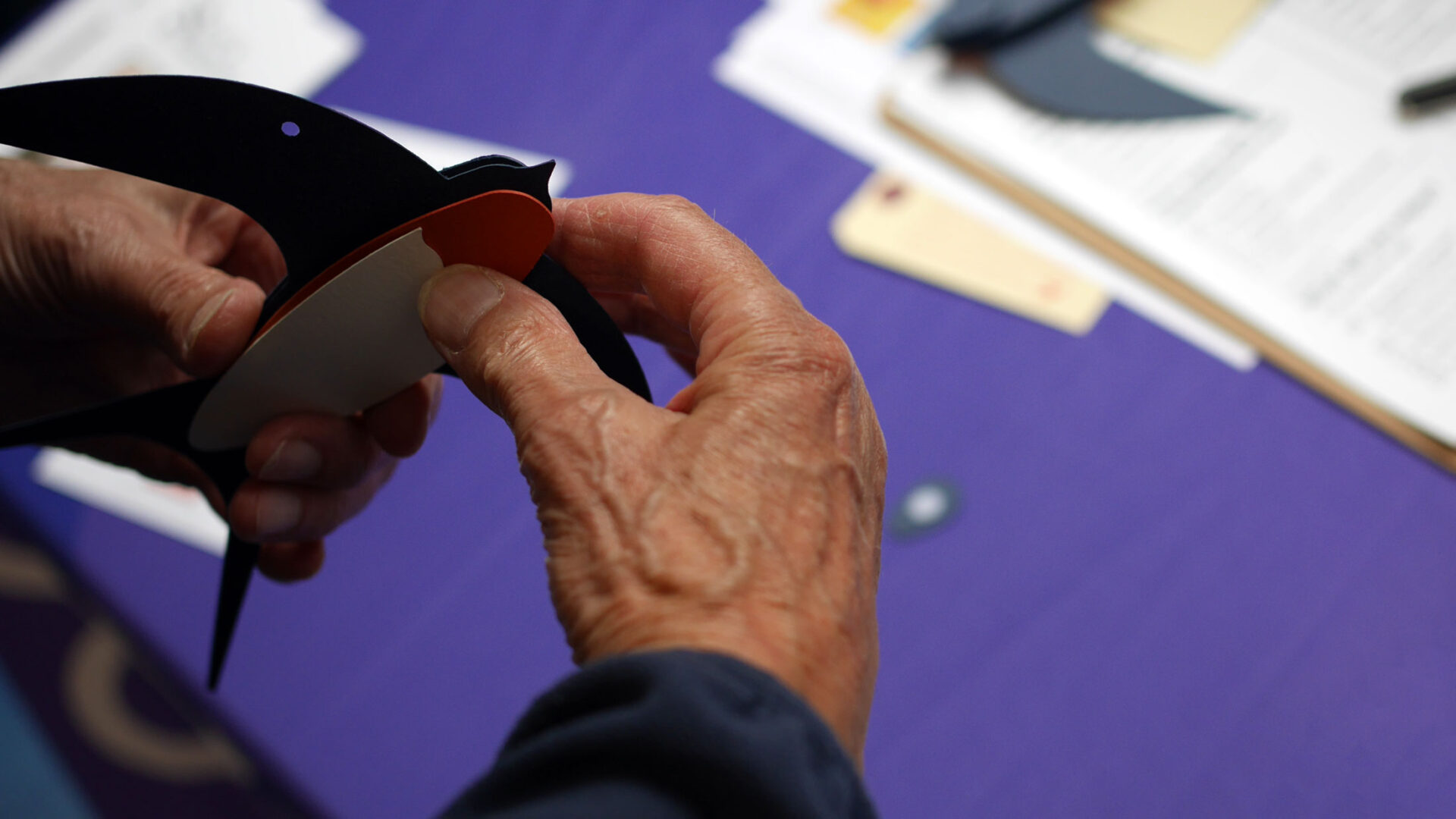
Our first feedback session in an NHS setting
A test flight for the Wild Wings of Hope AR prototype, in collaboration with RSPB Scotland—exploring how craft, storytelling and technology can support nature connection in care.
4