I’m back in the studio with the papercut prototypes I’ve been developing over the past weeks.
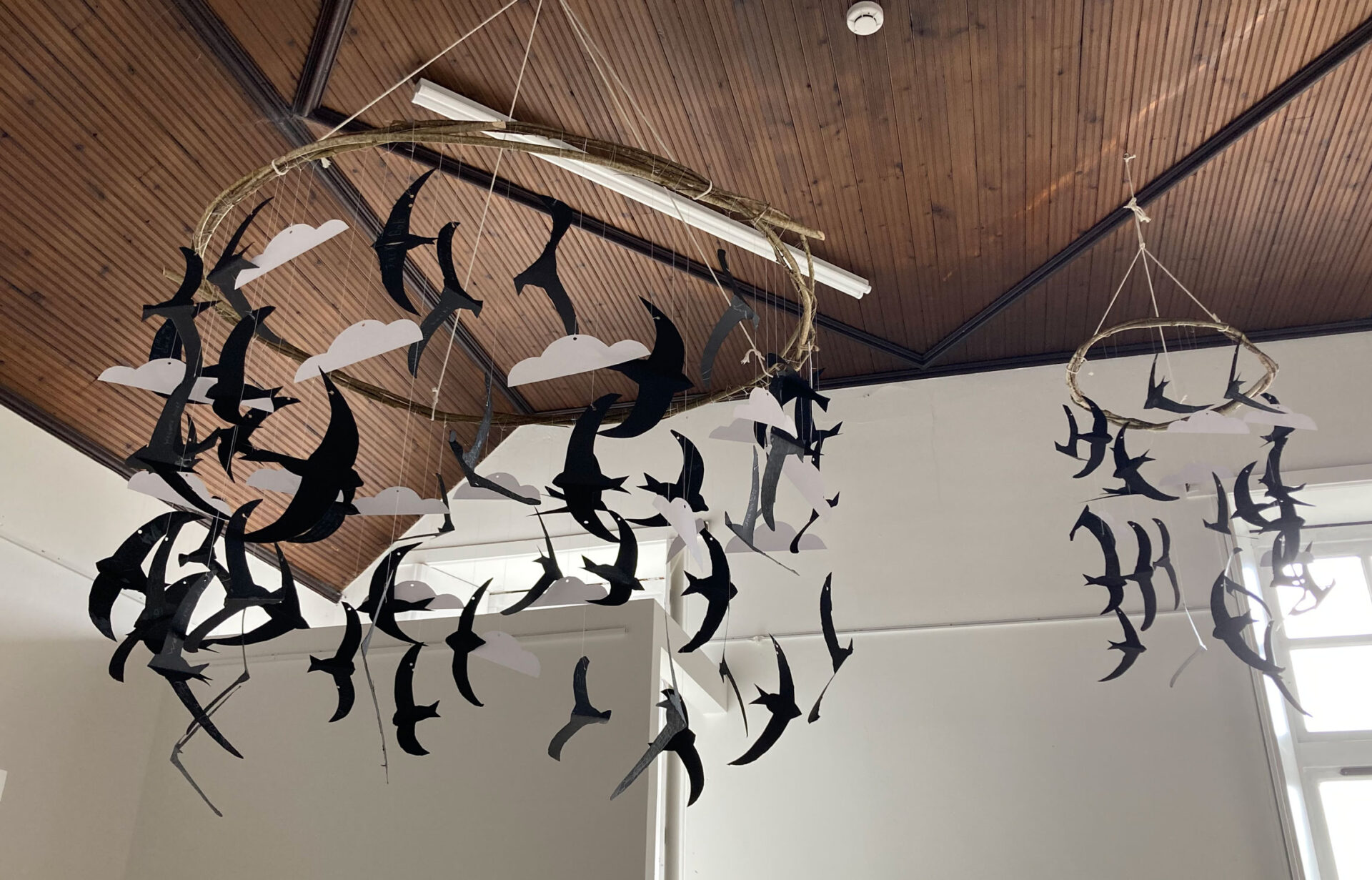
I’m now experimenting with suspension — how the barn swallows lift from the desk and begin to occupy the physical space. This phase of making focuses on mobiles: what happens to the birds once they leave the desk and enter three-dimensional space.
But before thinking about scale, I’ve been thinking about what holds the actual work.
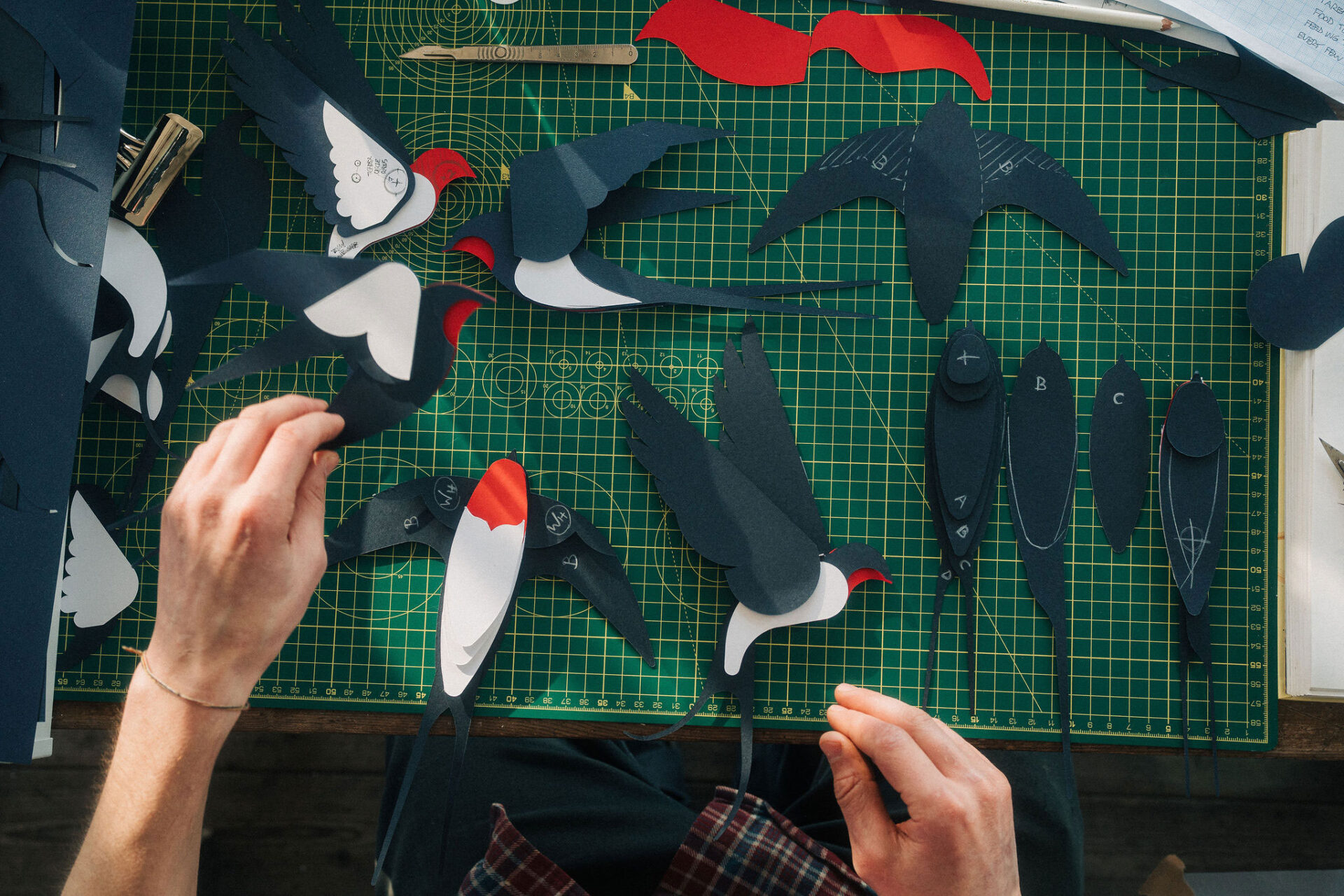
I’ve been experimenting with:
- Thread thickness
- Thread material (fishing wire vs cotton thread)
- Mobile material (wood vs steel)
- Mobile size (30cm vs 100cm)
- Mobile shape (cross-style wooden sticks vs wooden hoop)
- Barn swallow scale (small vs large)
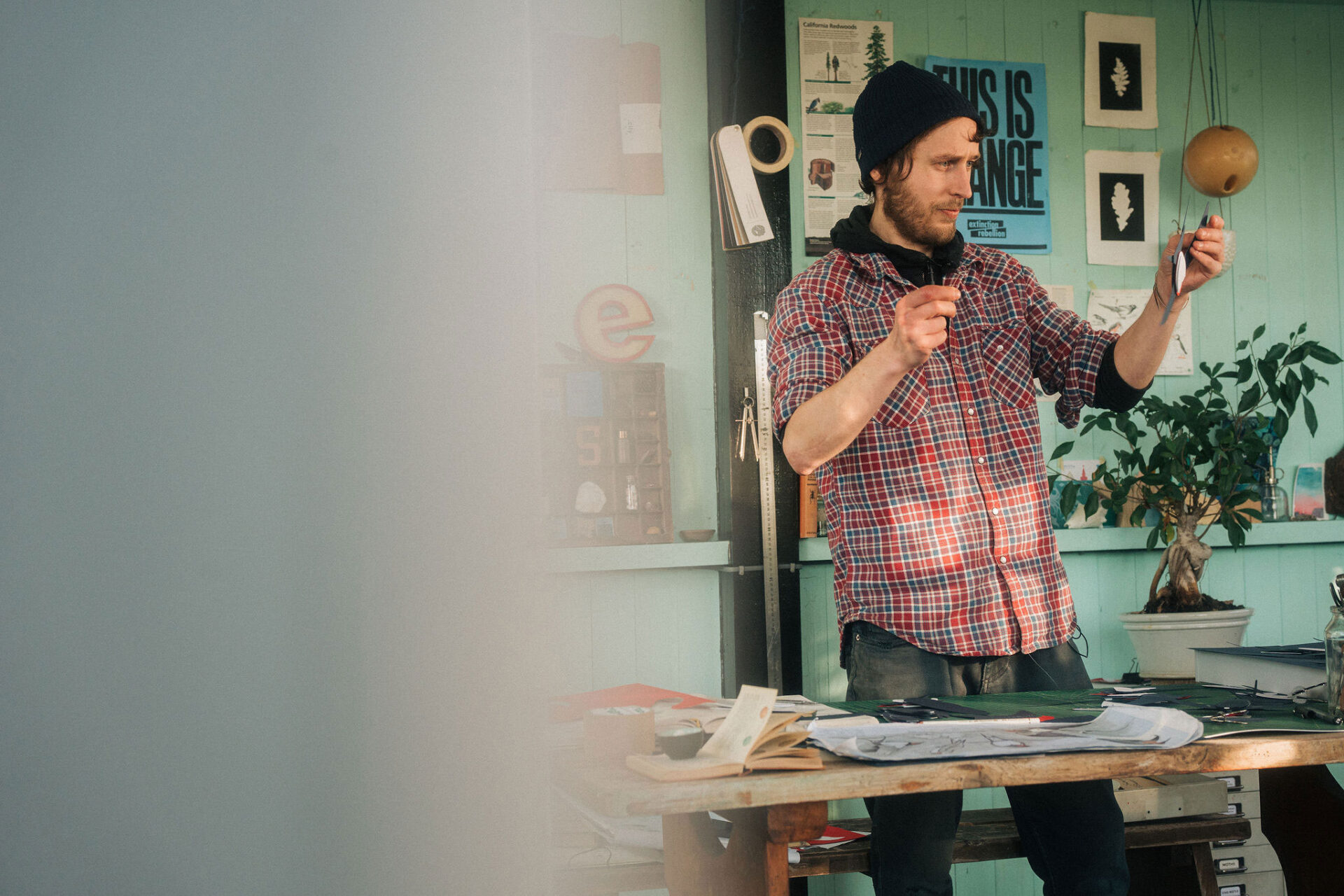
Testing threads and lines
Each decision affects how the work reads, behaves, and is used.
Fishing line is less sustainable (a plastic material), but it offers strength, subtlety, and reliability. It is visually discreet, tangles less during installation, and is better suited to meeting risk assessment requirements when work is suspended in a public space.
Cotton thread, by contrast, is organic, softer, and more visible, but less strong. This has led to a clear distinction in how materials are used: fishing wire will be used for the museum installation, where swallows are suspended overhead, and safety is paramount, while cotton thread will be used for community workshop mobiles.
In these settings, the mobiles are handled, carried, or displayed at lower heights, allowing material choices to prioritise tactility and sustainability without compromising safety.
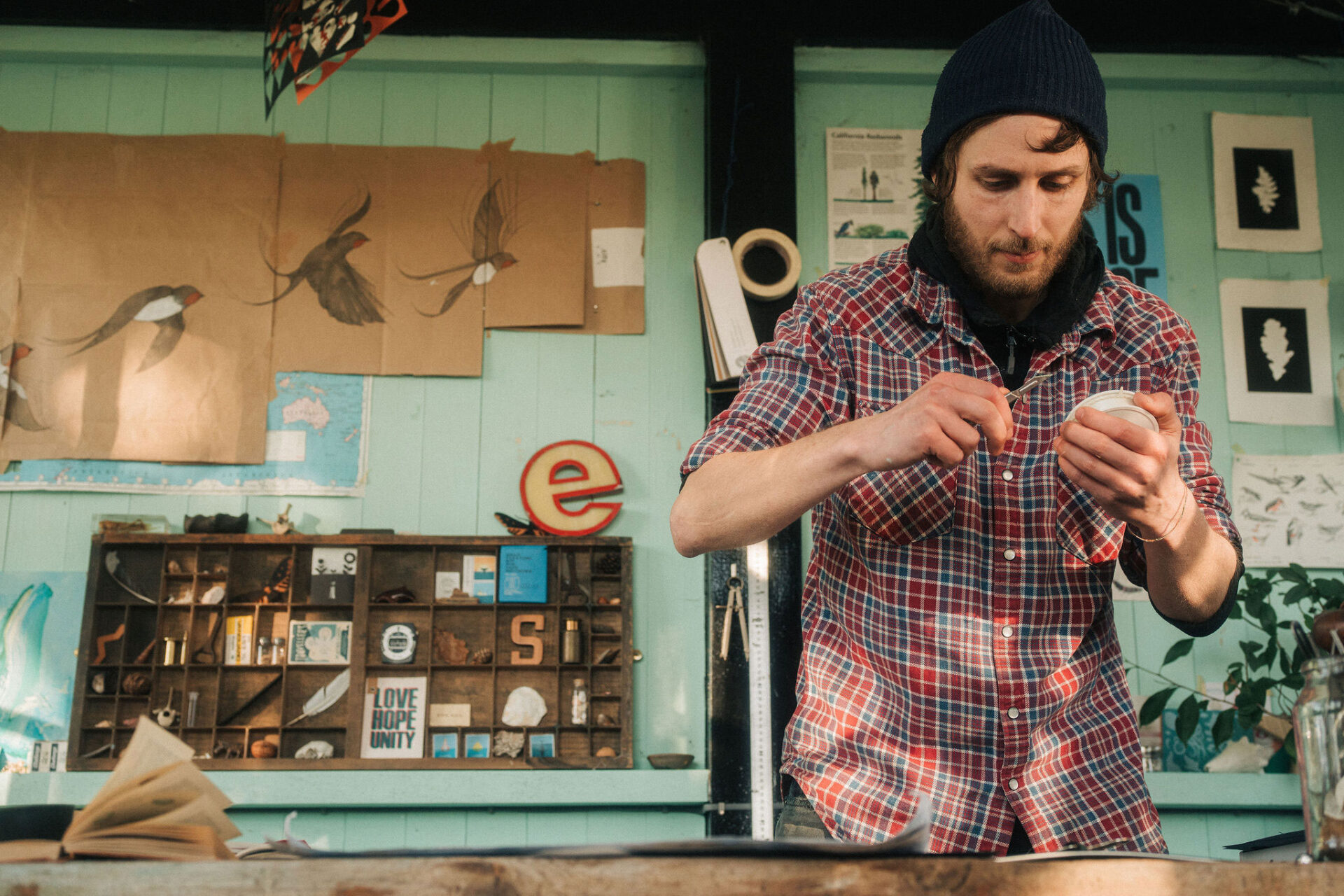
Mobile shapes and materials
Alongside the thread, I’ve been testing different hoops — large steel rings that will be suspended for a public installation at the National Museum of Scotland, and smaller wooden hoops designed for workshops.
The wooden forms are lighter, easier to hold, and suited to hands-on making. They will travel — used in community workshops here, and posted to hospice partners in South Africa as part of an ongoing exchange. The steel hoops, by contrast, are heavier and more assertive, designed to hold their presence within a large museum space.
I’ve also been developing a cross-style mobile, made from simple wooden sticks. Unlike the hoop, this form is designed to be hand-held. It allows storytellers to gently lift, lower, and reposition the paper swallows during storytelling sessions — suspending the birds in space as the narrative unfolds, rather than fixing them in one position.
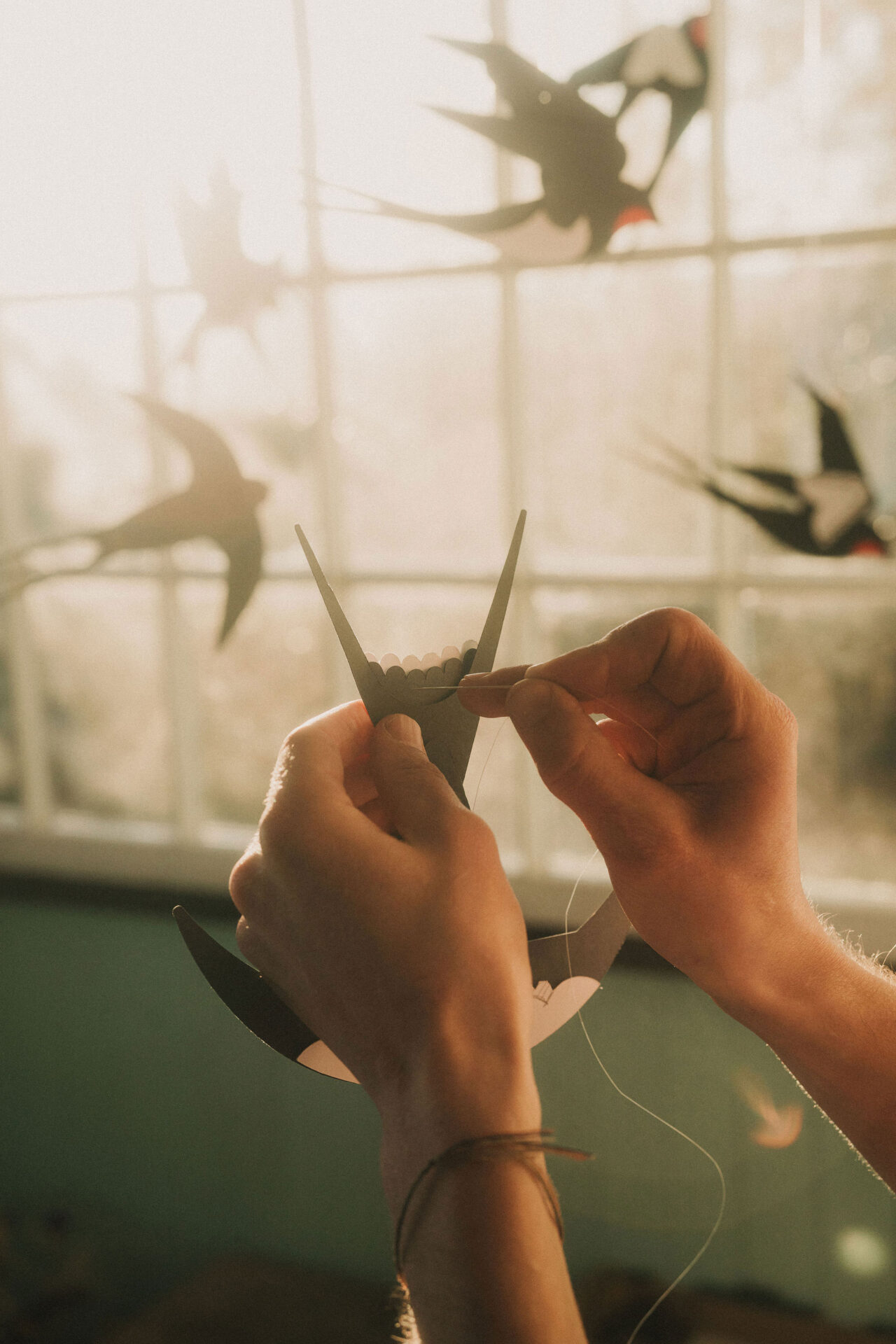
Scaling the Swallows
The first swallows I cut were delicate and precise — well-suited to being held, but too small to work at a museum scale. When suspended, they were visually lost in the space rather than shaping it.
So I began again.
I cut the birds twice as large. At this size, the swallows don’t disappear into the air — they begin to define it.
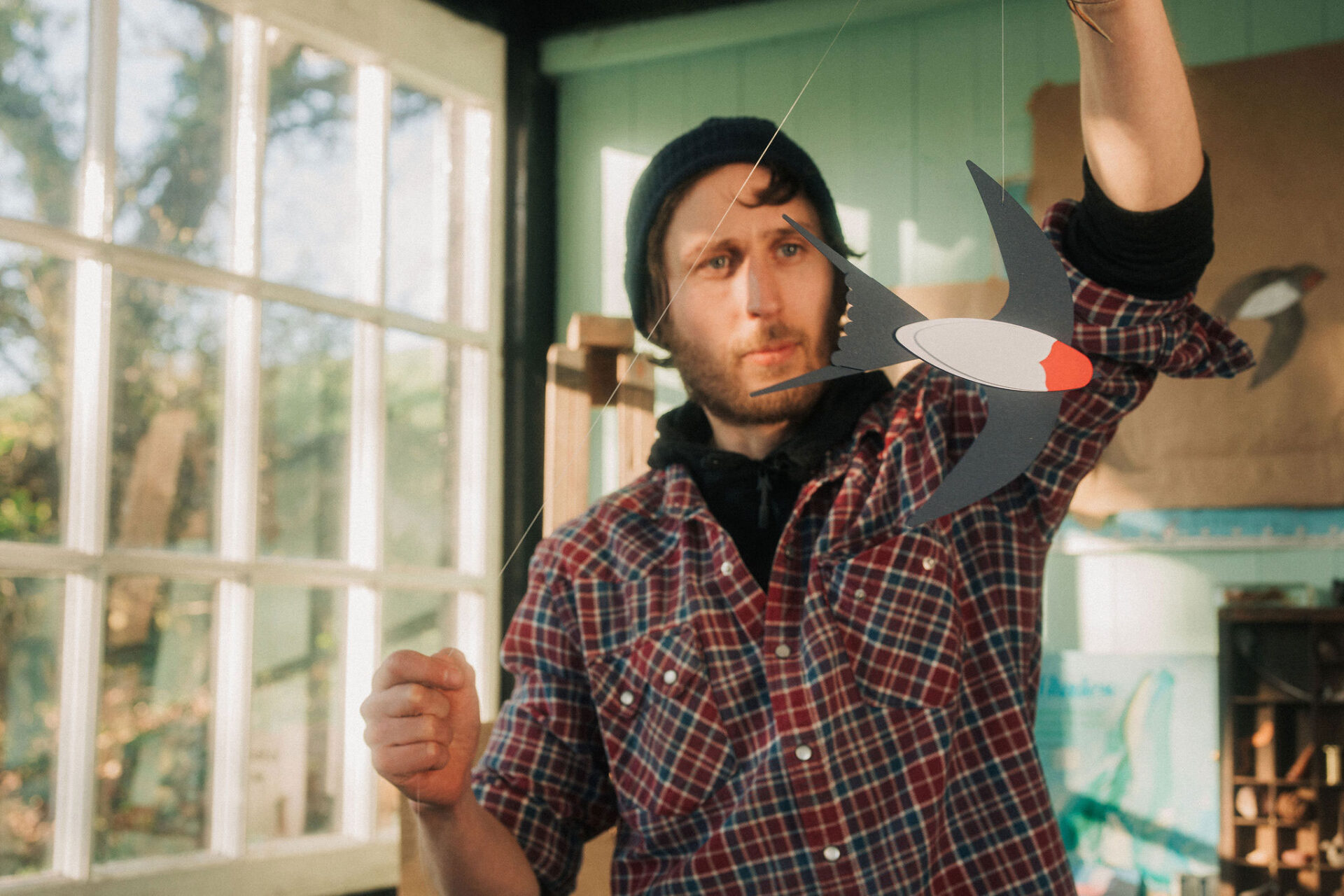
In the studio, a flock of Barn Swallows now hangs at varying heights (by varying threads), allowing me to observe how they move, settle, and respond to wind and light.
Working with mobiles as a medium is reinforcing how much of my papercut work depends on balance, spacing, and restraint. Too close, and the birds feel cluttered; too far apart, and the installation loses its impact.
In the corner, cardboard boxes hold batches of assembled, oversized barn swallows—papercuts prepared for suspension as a hanging installation in the National Museum of Scotland for the public launch of Wild Wings of Hope.
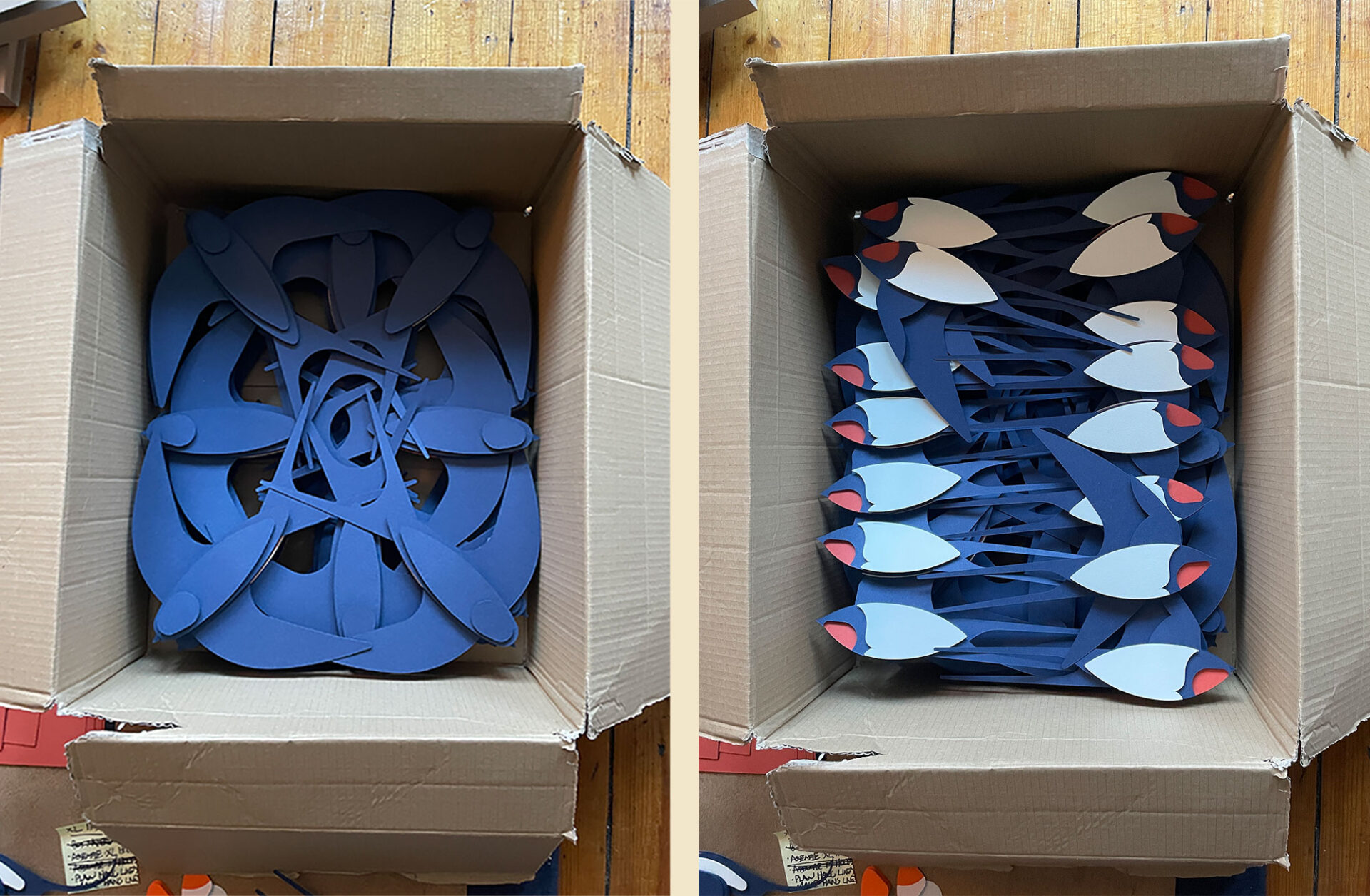
These larger-scale paper birds have been developed in response to the vast, open space in the Grand Gallery of the National Museum of Scotland.
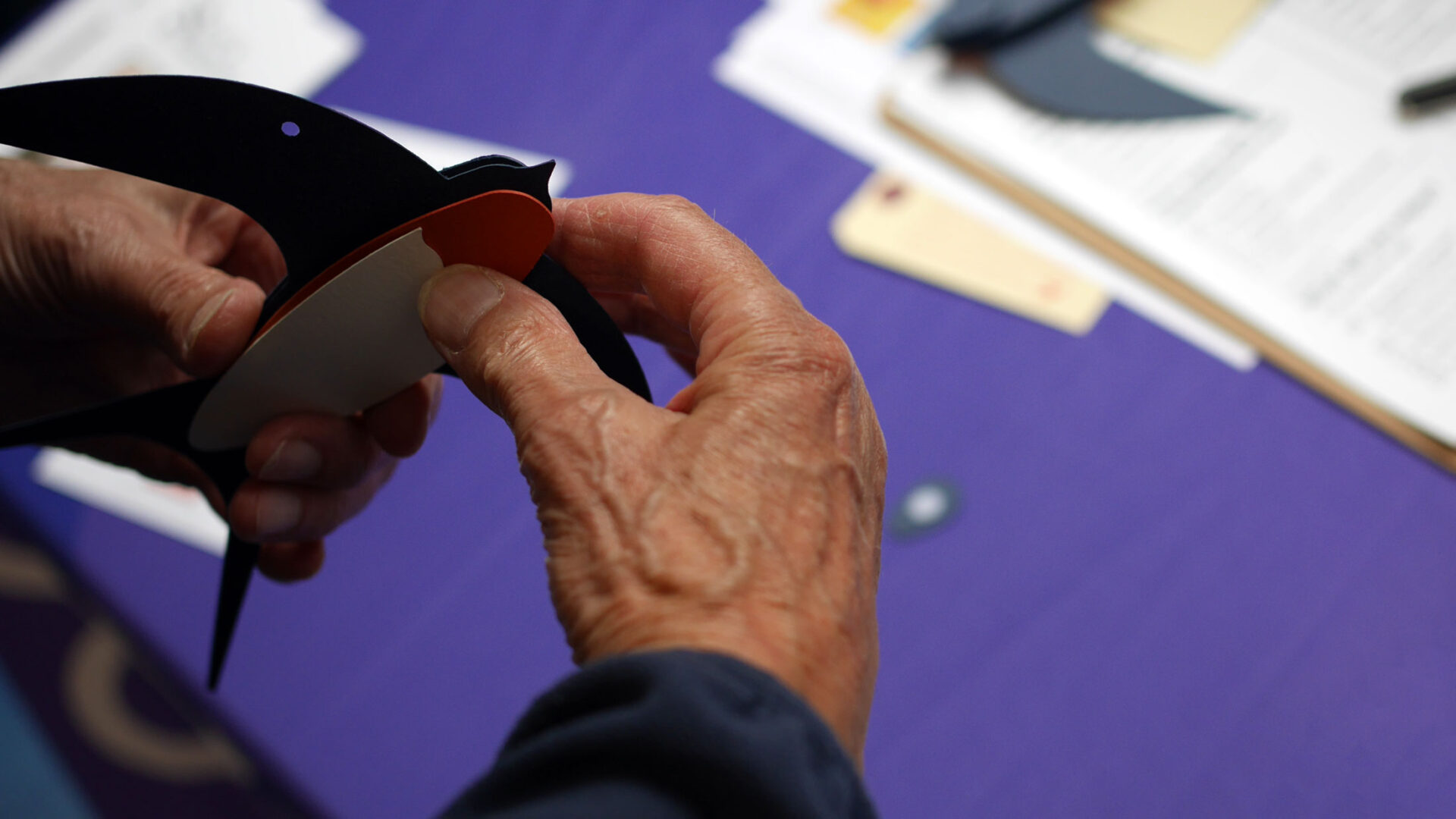
Alongside the large Barn Swallows, smaller life-sized paper bird components are being made in batches for community craft workshops, where participants can handle, assemble, and share the work as part of a wider process of making and exchange.

What I’m learning is that scale, material, and structure are not just practical decisions, but ethical ones. The work needs to respond carefully to its context — whether that’s a museum gallery, a workshop table, or a quieter setting where making happens at a slower pace.
With thanks to Creative Scotland for funding this phase of the work, and Fedrigoni for supplying the papers used in the workshops.
Our first feedback session in an NHS setting
A test flight for the Wild Wings of Hope AR prototype, in collaboration with RSPB Scotland—exploring how craft, storytelling and technology can support nature connection in care.
4