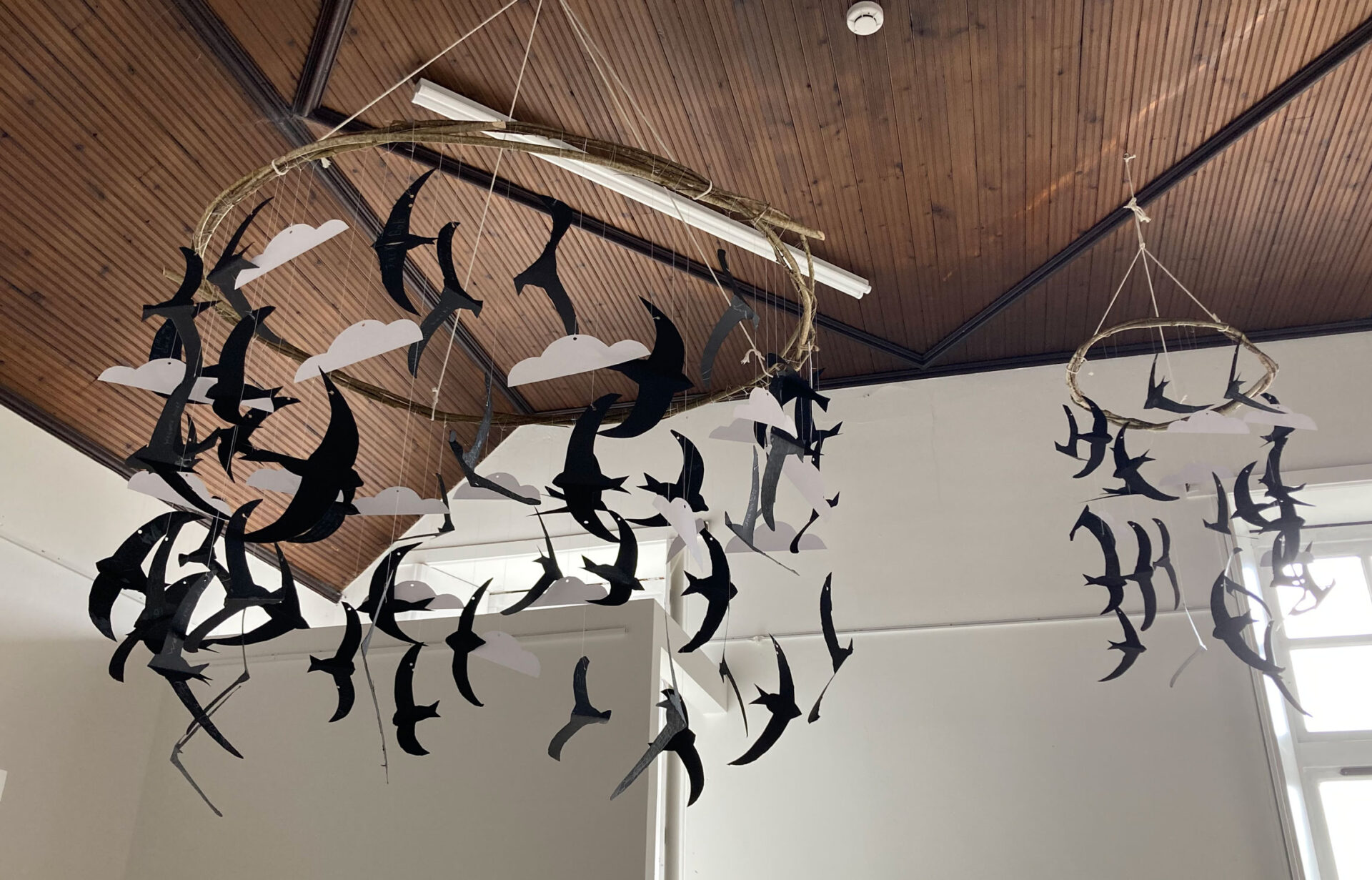
Swifts and swallows make epic journeys each year between the UK and Africa, their survival depending on healthy insect populations along the way.
This understanding is where the project began—and what has been explored through papercut so far.
These birds remind us that insects are not small or insignificant. They are the very threads that hold ecosystems together, making life and migration possible across continents.

Red admirals, death’s-head hawkmoths, and marmalade hoverflies move with the seasons, navigating winds, landscapes, and changing climates.
Together, these journeys form a vast, interconnected web of movement—linking insects, birds, plants, and cultures across continents. A reminder that migration is not the story of one species alone, but a shared, fragile choreography that depends on the health of the whole.

Red Admiral: a new papercut
Today, in the studio, the focus is a new species: the Red Admiral.
Some Red Admirals migrate south to Africa each year, riding favourable winds across continents. Others remain here in the UK, sheltering through the winter in sheds, tree hollows, and quiet corners of buildings—an evolutionary flexibility that allows the species to respond to changing climates and conditions.
This adaptability is part of what makes the Red Admiral such a compelling companion to sit alongside the migratory Swifts and Barn Swallows that I’ve been exploring through papercuts and mobiles in the studio.

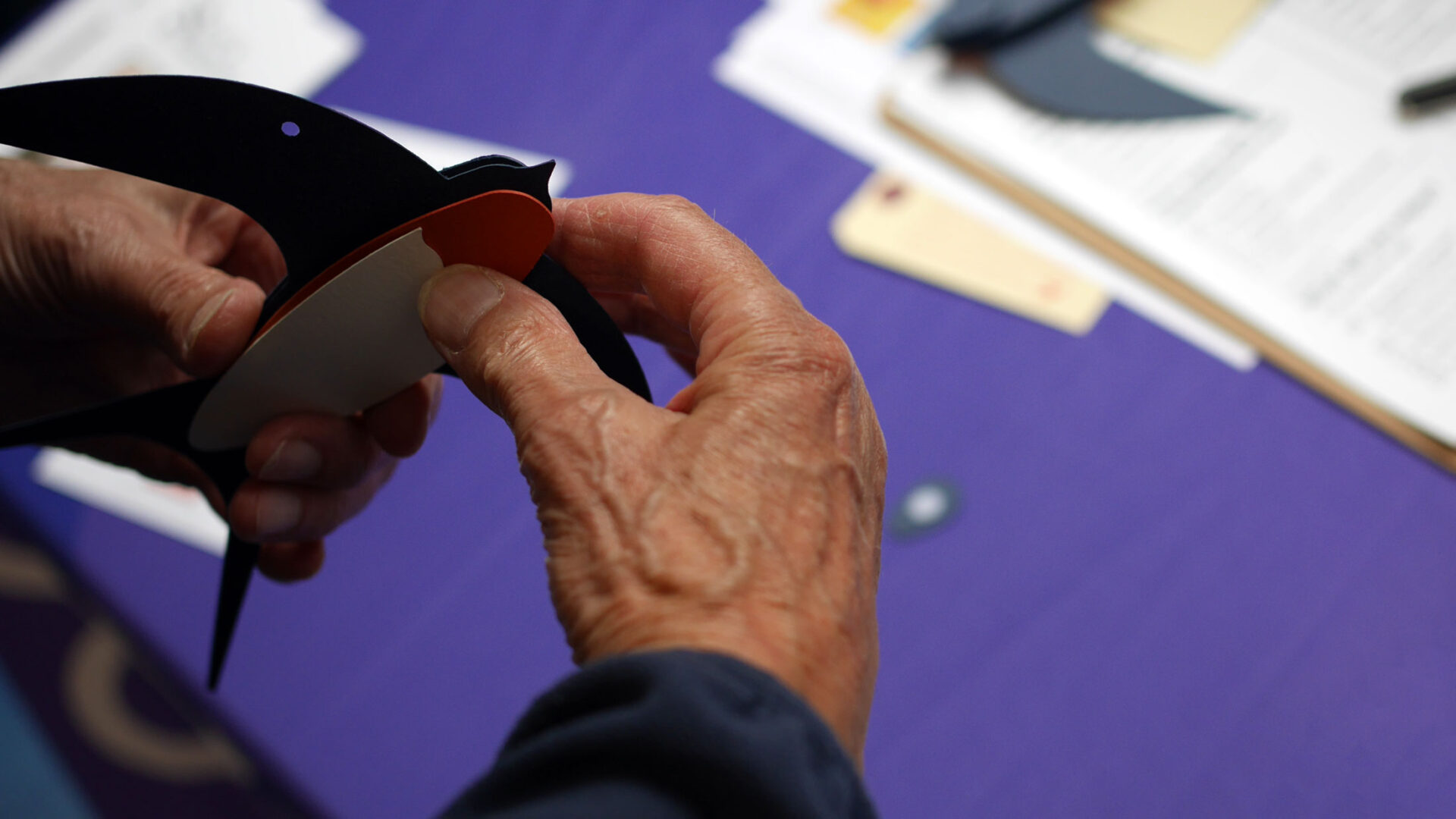
And so I continue to cut—wings, antennae, and delicate forms—building butterflies in paper, layer by layer, colour by colour.
Swifts and Barn Swallows, explored in earlier pieces, are now joined by butterflies and moths: quieter travellers whose journeys are no less extraordinary.
This process sits at the heart of Wild Wings of Hope—a project that brings together personal making, community workshops, and shared storytelling. What initially began at the cutting mat is gradually growing outward, shaped through creative workshops with children, families, and communities, and held within spaces of learning, care, and connection.

Wings without borders
Whether travelling thousands of miles or waiting out the cold closer to home, these insects remind us that resilience often lies in the most unexpected of places.
These papercut works—and the stories behind each species—will be displayed through an upcoming exhibition at the National Museum of Scotland, inviting people of all ages to pause with these fragile forms.
Together, the birds and insects trace a story of migration, interdependence, and hope—reminding us that even the smallest wings help carry life across continents.

This project is supported by Creative Scotland, enabling the time and space for research and making. The high-quality, responsibly produced papers are generously sponsored by Fedrigoni Papers.
Our first feedback session in an NHS setting
A test flight for the Wild Wings of Hope AR prototype, in collaboration with RSPB Scotland—exploring how craft, storytelling and technology can support nature connection in care.
4